Private Physical
Therapy & Training
At Your Doorstep

Private Rehab, Performance & Fitness Coaching — All In One Place

Helping active adults recover from injury, build real strength, improve mobility, and perform at their highest level — combining physical therapy and personal training, at home or online.

Specializing in →
Mobile Orthopedic PT Sports Medicine Fall Prevention & Balance Ergonomic Assessments Doctor-Led Personal Training & Strength Coaching Post-Surgical Rehabilitation Dry Needling Therapeutic Massage Stroke Rehabilitation Neck & Back Pain Concierge Physical Therapy
DPT · CPT
Doctor of PT & Certified Trainer
100%
One-on-one, every visit
Dr. Michail Baskaron, Doctor of Physical Therapy
Serving
Arlington, VA & Northern Virginia & DC
Doctor of Physical Therapy
Same-week appointments
Flexible mornings, evenings & weekends
12
Focused sessions often produce what 24 clinic visits cannot
60+
Specialist care for the active older adult community
1:1
Every minute of every session with your Doctor of PT
What We Treat

Expert care for every condition

Cash-based, concierge physical therapy delivered to your home in Arlington, VA, across Northern Virginia, and Washington DC.

Dry needling therapy
Dry Needling
Trigger point release for chronic muscle pain & tension
Back pain and sciatica
Back & Sciatica
Lower back pain, disc herniation & sciatic nerve pain relief
Post-surgical rehabilitation
Post-Surgical Rehab
Recovery after knee, hip, and orthopedic surgery
Fall prevention balance training
Fall Prevention
Balance & gait training for older adults & stroke recovery
Neck pain headache relief
Neck Pain Relief
Cervical disc, tension headaches & whiplash treatment
Elderly person with arthritis knee pain
Arthritis Pain Relief
Knee, hip, shoulder & spinal arthritis treatment
Tennis player with elbow pain
Tennis Elbow Pain
Lateral epicondylitis & dry needling treatment
Person with chronic back pain
Chronic Pain
Fibromyalgia, myofascial pain & central sensitization
Why PTN Fitness

Care designed around you — not around an insurance quota

Traditional clinics see 8–12 patients at a time. Your therapist has 15 minutes with you, then hands you to an aide. You wait weeks for a slot and leave with a generic program.

At PTN Fitness, we come to your home. You get a Doctor of Physical Therapy for a full hour, every visit. The plan is built around your life, your goals, and your specific body — nothing generic about it.

What you actually get

Every visit, without exception

Full hour with a Doctor of Physical Therapy
Treatment in your home — no commute, no waiting room
A plan built around your diagnosis, your goals, your life
Superbill provided as needed for out-of-network PT reimbursement
Same-week appointments — no 3-week wait
Available for busy professionals, seniors, and post-surgical patients
Specialized for 60+

Physical Therapy & Doctor-Led
Personal Training for Older Adults

You deserve more than a generic workout plan. When you train with PTN Fitness, every session is designed and personally led by a Doctor of Physical Therapy serving Arlington VA, Northern Virginia, and Washington DC.

Active older adult exercising with professional guidance
60+
Specialist Care
Doctor-Led Workouts

When you book, you get a DPT — not a trainer

Most fitness programs for older adults are led by trainers with limited understanding of injury, pain, or how the aging body truly moves. At PTN Fitness, your workout is personally designed and led by a licensed Doctor of Physical Therapy who understands the full picture — from your medical history to your movement goals.

Whether your goal is to get stronger, move without pain, recover from surgery, or simply remain independent longer, we build a plan around your body, your history, and your life.

  • Every session personally led by Dr. Baskaron, DPT
  • Programs tailored to your specific movement patterns and history
  • Combines clinical PT expertise with progressive strength training
  • Reduces fall risk — improves balance, coordination, and confidence
  • Cash-based only — no insurance required, no surprise bills
  • In-home sessions across Arlington VA, Northern Virginia, and Washington DC
1:1
Private sessions — full undivided attention, every time
DPT
Doctor of Physical Therapy leading every single workout
0
Wasted minutes — every second drives your goals forward
Professional ergonomic workspace assessment
Posture & Ergonomic
Assessment
Home · Office · Gym
Ergonomics & Posture

Work Smarter.
Move Better. Hurt Less.

Most chronic neck, shoulder, and back pain traces directly back to how you sit, stand, and move throughout your day. A one-time ergonomic assessment can reveal and fix the root cause — before it becomes a serious problem.

PTN Fitness brings a clinical eye to your actual workspace — your home office, corporate desk, or gym setup — and creates a personalized correction plan built around how you actually work and move.

  • Full workstation setup evaluation — desk, chair, monitors, keyboard
  • Posture analysis and movement pattern correction
  • Targeted exercises to address the specific imbalances found
  • Performed at your location in Arlington VA, Northern Virginia, or Washington DC
  • Written report of findings & a clear action plan to take home
Who We Help

We Help People Who…

If any of these sound familiar, you are exactly who PTN Fitness was built for.

Finished PT but still not 100%

You completed your insurance-covered visits but still feel weak, stiff, or cautious. You need someone who can bridge the gap between “cleared” and truly ready.

Want to exercise but are afraid of reinjury

You know you need to move more. But every time you try, something flares up. You need a trainer who can keep you safe and progressing at the same time.

Struggle with back pain at the desk

Hours of sitting are destroying your posture and your lower back. You need a plan that addresses the root cause — not just the pain where you feel it.

Cannot make it to a clinic

You travel for work, care for a family member, or simply cannot afford to lose an hour commuting both ways. You need expert care that comes to you.

Want to train at the next level

You are active and ambitious — pickleball, golf, hiking, running, lifting. You want a coach who can push your performance without creating new injuries.

Feel like you were just handed off to a tech

You paid for a physical therapist and spent most of your visit with an aide doing generic exercises. You deserve a Doctor-to-patient session, every single time.

What Recovery Looks Like

Real care. Real results. At home.

Physical therapy does not have to mean a sterile clinic and a rushed visit. It looks like this.

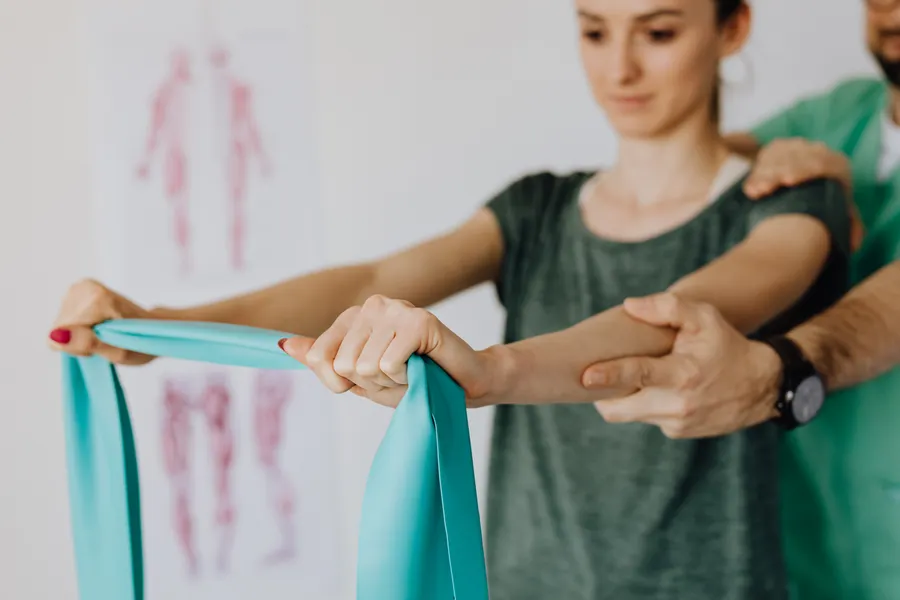
Therapist helping patient with arm exercises at home
Care in your comfort zone
Healing is faster when you are at ease, in the environment you know and trust.
Physical therapist providing hands-on treatment
Expert hands, full attention
Every minute of every session is focused entirely on you — no aides, no distractions.
Patient doing guided rehabilitation exercises
Back to what you love
From pickleball to climbing stairs — your personal goals drive everything we do.

Ready to feel better at home?

Book a private session and experience the difference of truly personalized care. Serving Northern Virginia and the DC area.

About PTN Fitness

Meet Dr. Michail Baskaron, DPT, CPT

Founded on the belief that exceptional physical therapy and performance coaching — done without compromise — changes lives. Every session reflects that standard.

Dr. Michail Baskaron, Doctor of Physical Therapy, Northern Virginia
Dr. Michail Baskaron
Doctor of Physical Therapy · DPT · CPT
Why PTN Fitness Exists

Built for the patients the standard model leaves behind.

PTN Fitness · Arlington, VA · Northern Virginia & Washington DC · Concierge Physical Therapy

"I became a physical therapist because I was once the patient who did everything right — and still never got better."

— Dr. Michail Baskaron, DPT, CPT

I know exactly what it feels like to sit in a waiting room, finally get 20 minutes with a therapist, receive a printed sheet of exercises, and leave wondering if anything was actually going to change. I have been that patient. I have paid the copays. I have met the deductible. And I still did not get better.

That experience is what sent me to physical therapy school — not to practice the same model, but to build something completely different. Because I had seen firsthand that it was not a lack of effort on the patient’s part. It was a lack of time, attention, and individualization in the care itself.

Today, every session I deliver is one full hour, one-on-one, in your home. No waiting room. No techs. No one-size-fits-all printout. Just focused, personalized care designed around your body, your goals, and your life — whether you are recovering from surgery, managing pain, or training to stay strong and active for years to come.

I serve patients across Northern Virginia and Washington DC who are tired of feeling like a number in a system. If you have tried traditional physical therapy and feel like you deserved more — you probably did. That is exactly why PTN Fitness exists.

Foundation
Built from years of home health physical therapy — among the most demanding, most independent, and most impactful areas of the profession
Clinical Depth
Lower back pain, sciatica, post-surgical rehab, ACL reconstruction, and performance training for complex patients
The Standard
One full hour, one focused therapist, one person — designed entirely around your body, your history, and what you actually want to achieve
The Difference
From recovery to real strength — PTN Fitness is purpose-built to carry patients through both, without gaps, without compromise
Share Your Experience
Dr. Baskaron with a patient on crutches, walking together toward recovery
Where Real Recovery Happens

The most important room in your recovery is the one you live in.

This is what home health physical therapy looks like when it is delivered with full clinical depth — a licensed Doctor of Physical Therapy working in the environment where your daily life actually happens. No waiting rooms to navigate. No sterile setting disconnected from the way you move, sleep, cook, or rise from the floor. The environment becomes part of the care itself.

After working through knee replacements, hip reconstructions, ACL surgeries, and complex spinal cases, the evidence is consistent: recovery accelerates when expert care meets a patient inside their real world. Goals become clearer. Sessions become more purposeful. And the results extend far beyond what a clinical setting alone can produce.

This is what PTN Fitness brings to every patient across Northern Virginia and Washington DC — the clinical precision of a doctoral-level therapist, delivered where it matters most.

What Drives Us

Purpose. Mission. Values.

Everything we do is shaped by a deep commitment to quality care and genuine human connection.

Our Purpose

We exist to bring exceptional physical therapy directly to you — in your home, office, or gym. No waiting rooms, no rushed sessions, no compromises. Just world-class care delivered where you live your life, right here in Northern Virginia and Washington DC.

Our Mission

To give every patient the highest quality care while helping them truly understand their condition — the what and the why behind it. We believe an informed patient heals faster, stays healthier longer, and gains the confidence to maintain their progress well after therapy ends.

Our Values
  • We care for every patient as if they were family — with full attention and genuine warmth
  • We are determined: your recovery is our personal responsibility
  • We listen closely, because you are a whole person — not just an injury
  • We stay optimistic, because the right care truly can change everything
  • We come to you — because convenience is an essential part of getting better
Why PTN Fitness

Physical Therapy & Personal Training
Built Around
Your Goals

One focused hour. One Doctor of Physical Therapy. Zero waiting rooms, aides, or insurance clocks. Here is why it works.

1:1
Every minute, every visit
10–12
Sessions vs. 24 in a clinic
0
Waiting rooms, ever
DPT
Doctoral care at your door
Physical therapist working with patient at home
Dr. Michail Baskaron
Doctor of Physical Therapy — DPT
Certified Personal Trainer — CPT
Founder, PTN Fitness
The Foundation

We Move So
You Don't Have To.

Before Dr. Baskaron was a physical therapist, he was a patient. He went to PT the right way — showed up every appointment, did the exercises, paid the copays, met the deductible. And after all of it, he still did not feel better. He got handed a printout, shared a table with two other patients, and spent most of the session working with a tech while the PT circled the room.

That experience did not discourage him from physical therapy. It sent him to PT school to build something better. Because the problem was never the science — it was a model that does not give therapists the time or space to actually do the work. One uninterrupted hour with a trained clinician, focused entirely on you, produces results that six rushed 20-minute sessions simply cannot match.

PTN Fitness was built on that truth. Every session across Northern Virginia and Washington DC is a full hour, one-on-one, inside your home — delivering the kind of focused, intelligent care Dr. Baskaron once needed and never received.

The Real Difference

Two completely different models of care

Same credential on the door. A completely different experience for the patient.

Traditional Clinic

  • Wait 2–4 weeks for your first appointment
  • Drive, park, and sit in a crowded waiting room
  • 10–15 rushed minutes with the actual therapist
  • Remaining time with an aide — hot packs, basic exercises
  • Your PT managing 8–12 patients simultaneously
  • Generic protocol for every patient with your diagnosis
  • Commuting while in pain before treatment even begins
  • 24 visits that barely move the needle

PTN Fitness at Your Home

  • Same-week appointments — often next-day
  • No driving, no parking, no waiting room — ever
  • Every minute of your session with a Doctor of Physical Therapy
  • No aides, no techs — doctoral expertise the entire hour
  • One patient at a time — you are the only focus
  • A plan built entirely around your body, your goals, your life
  • Rehab in your real environment: your stairs, your chair, your home
  • 12 focused sessions delivering what 24 clinic visits cannot
The PTN Fitness Standard

Three principles that never change

Full Hour. Every Visit.

No 15-minute handoffs. No rushing to the next patient. Every session is a complete, uninterrupted hour of doctoral-level care devoted entirely to you.

Your Environment. Your Recovery.

Rehab happens on your actual stairs, in your kitchen, around your furniture. Progress made at home transfers directly to real life — not to a clinic that looks nothing like it.

Cash-Based Freedom.

No insurer dictating your treatment. No 10-visit caps. No discharge date set by a billing code. Your recovery progresses at the pace your body demands.

You deserve better than 15 minutes and a hot pack

Experience what a full hour of focused, doctoral-level in-home care can do. Serving Arlington VA, Northern Virginia, and the DC area.

Dry Needling Services — Arlington VA & Northern Virginia

Dry Needling

Precision trigger point therapy that reaches where hands cannot — releasing deep muscle tension, resetting pain signals, accelerating recovery.

Dry needling therapy being applied to patient

You have had a knot in your upper trap for months. You have tried massage, hot packs, and stretching. The tension always comes back within 48 hours. That persistent, aching tightness is a trigger point — and surface pressure alone will not release it. Dry needling reaches the muscle directly, creating an immediate twitch response that releases the contracted fibers and resets the pain signal at its source. Most patients describe a dramatic reduction in tension within 24 hours of their first session.

30 minutes. Meaningful relief, often after the very first visit. Dry needling is particularly powerful for upper trap tension, neck stiffness, and glute pain that has not responded to other treatments.

How it works

Thin, sterile needles are inserted into trigger points — hyperirritable muscle knots that cause local and referred pain. The needle creates a brief twitch response, the muscle releases, and the pain cycle breaks at its source.

Unlike acupuncture, dry needling is grounded in Western anatomy and neuroscience. It directly targets the musculoskeletal and neurological mechanisms behind your pain.

Benefits

  • Releases deep trigger points that massage alone cannot reach
  • Immediate reduction in muscle tension and referred pain
  • Restores blood flow and oxygen to hypoxic tissue
  • Resets overactive pain signals in the nervous system
  • Improves range of motion — often within a single session
  • Speeds recovery for athletes and post-surgical patients
  • Long-lasting results — not just temporary symptom relief

Risks & side effects

Dry needling is very safe when performed by a trained Doctor of Physical Therapy. Side effects are usually mild and short-lived.

  • Muscle soreness 24–48 hours after treatment (similar to a workout)
  • Minor bruising or bleeding at needle sites
  • Temporary fatigue following the session
  • Rare: brief dizziness during or after treatment
  • Not recommended during pregnancy or with certain bleeding disorders

Muscle coverage

Most major muscle groups are treated. Muscles within the lung field are excluded for patient safety.

Treated areas

Upper TrapsLower BackGlutesHip FlexorsHamstringsCalvesShouldersNeckForearms

Excluded (lung field)

QLRhomboidsMid Traps

Serving Arlington VA, Northern Virginia & DC. Sessions are 30 minutes. Pricing varies by location — contact us for details.

What every session includes: A personalized treatment plan reviewed and adjusted each visit — your therapist does not follow a script. Hands-on manual therapy, supervised therapeutic exercise, and a home program tailored to where you are in your recovery. Before every session ends, you know exactly what was done, why, and what comes next.

Ready to try dry needling?

Sessions performed in your home with full clinical attention from a Doctor of Physical Therapy.

Service

Therapeutic Massage

Focused 30-minute clinical massage sessions targeting your tightest, most painful muscles — trigger point release that actually lasts.

Therapeutic massage session with physical therapist

You sit at a desk all day, and by 3 p.m., your neck and shoulders feel like concrete. You have had massages before, but the relief lasts a day or two and the tension always comes back. Clinical therapeutic massage is different — it targets the specific muscles creating your pain using technique informed by anatomy and diagnosis, not a fixed routine. A focused 30-minute session on your actual problem areas delivers lasting results that a generic spa massage cannot replicate.

This is not a relaxation massage. It is skilled, clinical manual therapy. Every 30 minutes is strategically focused on the muscles causing your pain — no wasted time, no generic technique.

Primary focus areas

  • Neck & upper trapezius — the most commonly overloaded muscle from desk work, driving, and daily stress
  • Lower back & paraspinals — surrounding tissue limiting movement and causing constant aching
  • Glutes & piriformis — often at the root of hip pain and radiating sciatic symptoms that feel like “back” pain
  • IT band & tensor fasciae latae — overworked in runners, cyclists, and anyone sitting for long hours
  • Hamstrings — chronically tight from prolonged sitting, pulling the pelvis and straining the lumbar spine
  • Shoulders & rotator cuff — restricted from guarding, impingement, or post-surgical stiffness
  • Calves & plantar fascia — driving ankle stiffness, heel pain, and altered gait patterns
  • Any area of pain or tightness — every session is fully customized to your body that day

What it does for you

  • Immediate pain reduction by activating the body's natural analgesic response
  • Restored range of motion as tight soft tissue releases around joints
  • Better sleep and recovery through improved circulation and lymphatic flow
  • Reduced muscle guarding that contributes to chronic, recurring pain patterns

30-minute sessions performed in your home. Pricing varies by location.

What every session includes: A personalized treatment plan reviewed and adjusted each visit — your therapist does not follow a script. Hands-on manual therapy, supervised therapeutic exercise, and a home program tailored to where you are in your recovery. Before every session ends, you know exactly what was done, why, and what comes next.

Ready to get started?

Same-week appointments available. PTN Fitness comes to your home in Arlington VA, Northern Virginia, and DC.

Service

Assisted Stretching

Long-lasting flexibility gains through expert, hands-on technique — results you simply cannot achieve stretching on your own.

Physical therapist performing assisted hamstring stretch with resistance band

You have been trying to touch your toes for years. You stretch every morning and still feel stiff by afternoon. The problem is not effort — it is technique. Self-stretching activates the stretch reflex, which causes the muscle to tighten instinctively and protect itself. Assisted stretching uses precise angles, positioning, and the practitioner’s resistance to override that reflex, reaching a depth and producing lasting flexibility gains that solo stretching simply cannot access. One focused session produces more measurable progress than months of stretching on your own.

Most people stretch the wrong muscles, in the wrong direction, with the wrong technique. One assisted stretching session with a Doctor of Physical Therapy produces more lasting gains than months of self-stretching.

Why it works

  • Neurological override of the stretch reflex allows deeper, safer gains
  • Expert guidance to the exact angle and duration your body needs
  • Targets the specific muscles causing your pain and stiffness
  • Safe for all ages, fitness levels, and post-surgical patients
  • Long-lasting flexibility — not just temporary looseness

Commonly treated muscles

  • Hamstrings — the most commonly tight muscle, pulling on the pelvis and causing low back pain
  • Hip flexors — shortened from sitting, creating anterior pelvic tilt and lumbar pain
  • Pectorals — pulling shoulders forward, the root cause of most neck and upper back pain
  • IT band, TFL & glutes — driving knee and hip pain in runners and desk workers
  • Calves & Achilles — altering gait mechanics and overloading the knees and back
  • Neck, lats & thoracic spine — every major muscle group can be addressed

Session length and pricing vary. You leave with a custom home routine designed for your specific tight areas.

What every session includes: A personalized treatment plan reviewed and adjusted each visit — your therapist does not follow a script. Hands-on manual therapy, supervised therapeutic exercise, and a home program tailored to where you are in your recovery. Before every session ends, you know exactly what was done, why, and what comes next.

Ready to get started?

Same-week appointments available. PTN Fitness comes to your home in Arlington VA, Northern Virginia, and DC.

Specialty

Post-Surgical Rehabilitation

Expert pre- and post-operative rehab — from your first day home after surgery to full return to the activities you love.

Therapist applying kinesiology tape to patient knee for post-surgical recovery

Joint replacement surgery is a new beginning — but only if the rehabilitation that follows is thorough, consistent, and started without delay. The surgery corrects the joint. Physical therapy restores the life.

Why PT after joint replacement cannot wait: Every day without structured rehabilitation, scar tissue forms, muscles weaken, and the joint stiffens. Research consistently shows that patients who delay PT beyond the first 1–2 weeks after surgery recover slower, experience more pain, and achieve worse long-term range of motion. The window for optimal recovery is real — and it closes fast. Early, supervised PT is not optional. It is the difference between a successful surgery and one that never delivers what was promised.

Prehab — before surgery

Patients who complete prehab programs recover faster, achieve better range of motion, and are significantly more likely to go home directly after surgery rather than to a rehabilitation facility.

  • Strengthen muscles around the joint before the procedure
  • Research shows prehab significantly speeds post-op recovery
  • Reduce swelling risk and improve surgical outcomes
  • Mentally and physically prepare your body for the process

Post-op — recovery and return

  • Immediate pain and swelling management
  • Progressive range-of-motion restoration
  • Gait retraining and functional movement recovery
  • Strengthening tailored to post-surgical biomechanics
  • Return to sport, recreation, and full daily life
  • Available in-home and online

Knee replacement is a specialty, but post-op rehab is available for any orthopedic surgery. Home-based PT is ideal for post-surgical patients — no transportation challenges, no risk of re-injury commuting, and rehab that happens right where you live.

What every session includes: A personalized treatment plan reviewed and adjusted each visit — your therapist does not follow a script. Hands-on manual therapy, supervised therapeutic exercise, and a home program tailored to where you are in your recovery. Before every session ends, you know exactly what was done, why, and what comes next.

Your recovery starts here

Contact PTN Fitness to discuss your surgery and build a recovery plan around your specific goals.

Specialty

Balance & Gait Training — Fall Prevention

Specialized care for the 60+ community — maintaining independence, preventing falls, and recovering function after a stroke.

Balance training and fall prevention exercise

Falls are the leading cause of injury in adults over 65 — and most are preventable. Balance is a trainable skill. With consistent, targeted exercise the decline that comes with aging can be slowed, reversed, and managed so you stay active and independent.

Why balance matters more as we age

After 60, the sensory systems that control balance — vision, inner ear, and joint position sense — become less reliable. Reaction time slows. Muscle strength decreases. The result is a gradual erosion of stability that most people do not notice until a fall happens.

  • 1 in 4 adults over 65 falls each year in the United States
  • Falls are the number-one cause of traumatic brain injury and hip fractures in older adults
  • Fear of falling leads to reduced activity, which accelerates balance decline further
  • Most falls happen during ordinary activities — walking, reaching, getting up from a chair
  • Evidence shows structured PT reduces fall risk by 30–40%

Gait training & balance rehabilitation

  • Gait analysis — identifying and correcting walking patterns that increase fall risk
  • Static and dynamic balance progressions — from stable two-foot stance to challenging single-leg activities
  • Reactive balance training — practicing recovery from unexpected perturbations before they become falls
  • Dual-task training — walking while talking or carrying, the real-world conditions where most falls occur
  • Leg, hip, and core strengthening targeting the specific muscles that control stability
  • Home safety assessment — identifying and eliminating environmental fall hazards
  • Assistive device training — proper fit and use of canes, walkers, and orthotics

Stroke rehabilitation

  • Upper and lower extremity movement restoration
  • Strength and coordination recovery using evidence-based protocols
  • Walking and gait retraining focused on safety and independence
  • Functional task training for daily life activities
  • Spasticity and tone management
  • Family and caregiver education and training included

Who benefits most

  • Adults 60+ who have had a recent fall or near-fall
  • Anyone who feels unsteady, shuffles when walking, or holds walls for support
  • Post-stroke patients at any stage of recovery
  • Parkinson's disease and other neurological conditions affecting balance
  • Post-joint replacement patients rebuilding gait confidence
  • Anyone who has reduced their activity because of fear of falling

Home-based PT is especially powerful for balance and gait training. Rehab happens on your actual stairs, in your kitchen, around your furniture. Every session is immediately applicable to your real life — making improvements that last. Serving Arlington VA, Northern Virginia, and Washington DC.

What every session includes: A personalized treatment plan reviewed and adjusted each visit — your therapist does not follow a script. Hands-on manual therapy, supervised therapeutic exercise, and a home program tailored to where you are in your recovery. Before every session ends, you know exactly what was done, why, and what comes next.

Ready to get started?

Same-week appointments available. PTN Fitness comes to your home in Arlington VA, Northern Virginia, and DC.

Service

Ergonomics & Posture

Fix your workspace setup and posture habits — and eliminate the root cause of neck, shoulder, and back pain from desk work.

Professional with correct seated posture at computer workstation

You start the workday feeling fine. By 11 a.m., there is a familiar tightness creeping into your neck and shoulders. By 3 p.m., you are shifting in your chair every few minutes trying to find a position that does not hurt your back. You have tried a new chair, a standing desk, and stretches between meetings. The pain keeps coming back. That is because the problem is not the equipment — it is the setup and the movement habits around it. Studies show that 80% of office workers experience musculoskeletal pain related to their workstation. The average person sits for more than 10 hours per day, and for every inch the head drifts forward from neutral, the load on the cervical spine increases by approximately 10 lbs — adding 20 to 30 lbs of constant pressure on the neck and upper back through every hour of your workday. PTN Fitness comes directly to your home or office in Arlington VA, Northern Virginia, and Washington DC, identifies the exact source of your posture-related pain, and corrects it the same visit.

If you sit at a desk for several hours a day, your workspace is almost certainly contributing to your pain. Poor posture compresses the cervical spine, narrows the subacromial space, strains the lumbar discs, and restricts breathing — all at once. One on-site evaluation addresses all of it.

What the evaluation covers

  • Full workstation assessment — monitor, chair, keyboard, mouse placement
  • Posture analysis in your actual work position
  • Hands-on adjustments and immediate setup corrections
  • Identification of movement habits causing repetitive strain
  • Custom desk exercise program for your workday

Common posture issues treated

  • Forward head posture — every inch forward adds ~10 lbs of load on the cervical spine
  • Rounded shoulders compressing the subacromial space and causing impingement
  • Anterior pelvic tilt from prolonged sitting compressing lumbar discs
  • Wrist and forearm strain from incorrect keyboard and mouse positioning
  • Thoracic kyphosis reducing breathing capacity and causing upper back pain

Ergonomics visits available as standalone sessions or combined with PT treatment.

What every session includes: A personalized treatment plan reviewed and adjusted each visit — your therapist does not follow a script. Hands-on manual therapy, supervised therapeutic exercise, and a home program tailored to where you are in your recovery. Before every session ends, you know exactly what was done, why, and what comes next.

Ready to get started?

Same-week appointments available. PTN Fitness comes to your home in Arlington VA, Northern Virginia, and DC.

Personal Training in Arlington VA & DC

Personal Training — Strength & Conditioning by a DPT, CPT

The safest, smartest way to get stronger, lose weight, and move better — led by a Certified Personal Trainer who is also a Doctor of Physical Therapy.

Older adult performing guided fitness exercise

You are ready to get back into the gym after your knee replacement. Or your back flares every time you try to exercise on your own. Or a personal trainer told you he was not comfortable working with your injury history. These situations are far more common than they should be. Most personal trainers are not trained to navigate pain, post-surgical protocols, or the nuanced movement dysfunction that follows an injury. PTN Fitness fills exactly that gap — a Doctor of Physical Therapy who designs and leads your training session, modifies in real time when something does not feel right, and ensures every exercise is building you stronger rather than setting you back. Whether you have been turned away by a trainer or simply want to train with the confidence that someone in the room truly understands your body, this is where you come.

This is what separates PTN Fitness from every other trainer. Dr. Baskaron holds both a Doctorate in Physical Therapy (DPT) and Certified Personal Trainer (CPT) credentials — meaning your training sessions are guided by someone who understands injury, surgery, pain, and performance simultaneously. No guessing. No red flags missed. Just results, safely delivered.

Who this is for

  • Post-surgical patients returning to activity safely
  • Anyone wanting to lose weight without risking injury
  • Desk workers counteracting the effects of prolonged sitting
  • Athletes and recreationally active adults (pickleball, golf, tennis, hiking)
  • Older adults focused on strength, balance, and independence
  • Anyone who wants to use home equipment correctly and safely

What sets DPT + CPT-led training apart

  • Correct exercise technique taught and monitored to prevent injury
  • Programs modified in real time based on pain and the body's response
  • Understanding of contraindications — what not to do, as much as what to do
  • Comprehensive assessment before any programming begins
  • Coordination with your surgeon or physician when needed
  • Can simultaneously address pain flare-ups during training sessions

Personal training sessions are cash-based only. Session pricing and duration vary by location and program. For insurance and payment questions, see our FAQ section.

What every session includes: A personalized treatment plan reviewed and adjusted each visit — your therapist does not follow a script. Hands-on manual therapy, supervised therapeutic exercise, and a home program tailored to where you are in your recovery. Before every session ends, you know exactly what was done, why, and what comes next.

Train smarter. Get stronger. Stay safe.

Book your first DPT + CPT-led personal training session — in-home or online.

Online Mobility Coaching & Remote Physical Therapy

Online PT & Mobility Coaching

The same expert care — live on your screen, from wherever you are in the world.

Virtual physical therapy session via video call

You live outside of Northern Virginia or DC. You travel frequently for work. Or you completed your in-home sessions and want to continue your program without scheduling another visit. Online physical therapy and personal training deliver the same doctoral-level expertise — live, through a secure video call — with real-time form correction, exercise prescription, and the same individualized approach you would receive in person. Your location does not limit your access to expert care.

Not in Northern Virginia or DC? Travel frequently? Online sessions deliver the same doctoral-level expertise through a secure, easy video platform. A phone, tablet, or computer with a camera is all you need.

Online physical therapy

  • Movement assessment and diagnosis via secure video
  • Exercise prescription and real-time form correction
  • Posture coaching, ergonomics review, and follow-up care

Online personal training

  • Customized weight loss and strength programs coached live
  • Post-surgical conditioning with clinical-level safety oversight
  • Correct technique coaching for every exercise

Available to anyone, anywhere. No geographic limits. Great for follow-up care after completing in-home sessions.

What every session includes: A personalized treatment plan reviewed and adjusted each visit — your therapist does not follow a script. Hands-on manual therapy, supervised therapeutic exercise, and a home program tailored to where you are in your recovery. Before every session ends, you know exactly what was done, why, and what comes next.

Ready to get started?

Same-week appointments available. PTN Fitness comes to your home in Arlington VA, Northern Virginia, and DC.

Northern Virginia & Washington DC

In-Home Physical Therapy

Doctoral-level rehabilitation delivered to your door — no clinic, no waiting room, no compromise.

Physical therapy treatment table set up at home

When movement becomes painful, getting to a clinic can feel impossible — and when you finally do get there, you spend 45 minutes of a 60-minute appointment waiting, then see three different aides before your actual therapist arrives for 10 minutes. PTN Fitness eliminates all of that. A Doctor of Physical Therapy comes directly to your home in Northern Virginia and Washington DC, bringing clinical-grade equipment, doctoral-level expertise, and 60 uninterrupted minutes of one-on-one care. No waiting rooms. No aides. No handoffs. The same clinician, every visit, who knows your case in full.

In-home physical therapy is not a compromised version of clinic care. It is often more clinically effective — your therapist assesses and treats you in the actual environment where you move, sleep, sit, and live. That context changes everything about the treatment plan.

Conditions We Treat at Home

  • Back pain, sciatica, and disc herniations
  • Neck pain, cervicogenic headaches
  • Post-surgical rehab (knee, hip, shoulder, spine)
  • Arthritis and joint degeneration
  • Chronic pain and central sensitization
  • Balance deficits and fall prevention
  • Sports and musculoskeletal injuries
  • Hypermobility and connective tissue disorders

What Every Session Includes

Every visit opens with a progress check and plan adjustment. You never follow the same script twice — your treatment evolves as your body does. Below are the clinical tools your DPT draws from during every home visit. Click any item to learn exactly what it is and how it works.

Manual therapy is the cornerstone of hands-on physical therapy — a family of skilled, passive techniques applied directly by your therapist to joints, muscles, nerves, and connective tissue. Unlike exercise, manual therapy works on structures you cannot voluntarily activate or release on your own. It is the primary reason seeing a Doctor of Physical Therapy in person produces faster results than a home exercise program alone.

Techniques used at PTN Fitness
  • Joint mobilization (Maitland Grades I–IV): Graded oscillatory movements applied to stiff or painful joints to restore arthrokinematic motion — the small gliding, rolling, and spinning motions that must occur for pain-free range of motion.
  • High-Velocity Low-Amplitude (HVLA) manipulation: The rapid, targeted thrust technique that produces the cavitation “pop.” Used selectively for facet joint restrictions in the spine, SI joint, and peripheral joints when indicated.
  • Soft tissue mobilization (STM): Direct, sustained pressure into restricted muscle tissue and fascia to break adhesions, improve extensibility, and restore normal muscle length-tension relationships.
  • Myofascial release: Sustained, low-load pressure held for 90–120 seconds to allow the fascial system to unwind and release. Particularly effective for chronic, diffuse pain patterns.
  • Neural mobilization (neurodynamics): Gentle mobilization of the peripheral nervous system — the sciatic nerve, median nerve, radial nerve — to reduce mechanosensitivity in conditions like sciatica, carpal tunnel, and thoracic outlet syndrome.
  • Instrument-Assisted Soft Tissue Mobilization (IASTM): Stainless steel tools used to detect and treat fascial restrictions, scar tissue, and chronic tendinopathy with controlled micro-shearing force.
Manual therapy is always followed by therapeutic exercise to reinforce the movement gains achieved — mobilization without movement training does not hold.

Therapeutic exercise is not “going to the gym” and not a generic printout of stretches. It is a clinically reasoned, individually prescribed movement program designed around your specific diagnosis, your current tissue capacity, and your functional goals — progressed visit by visit by the same DPT who evaluated you. Every set, every rep is observed and corrected in real time.

What makes therapeutic exercise different
  • Motor control retraining: After injury, the nervous system changes how it recruits muscle. Therapeutic exercise restores correct firing sequences — particularly deep stabilizers like multifidus, transversus abdominis, and rotator cuff — before loading superficial muscles.
  • Progressive overload with clinical precision: Load, range, tempo, and complexity are increased in a controlled sequence. Tissue heals at a predictable rate; your program respects that biology rather than pushing past it.
  • Neuromuscular re-education: Proprioceptive and balance exercises that restore the brain’s accurate map of where your body is in space — critical after ankle sprains, ACL injuries, and any surgery involving joint replacement.
  • Pain science-informed pacing: For chronic pain and central sensitization, exercise dosing is calibrated to the nervous system’s tolerance, not just tissue capacity — avoiding boom-and-bust cycles that derail recovery.
  • Your home is the gym: Your program uses equipment you actually own. Resistance bands, a chair, a wall, your own bodyweight — no gym membership required. Compliance goes up dramatically when the program fits real life.

Pain relief is not the finish line — it is the starting line. Functional training bridges the gap between “my pain is better” and “I can do everything I need to do.” It means training the exact movements that your daily life demands, in the environment where those demands actually occur. Your home is uniquely positioned for this: the stairs you climb, the floor you need to get off, the car you need to get in and out of are all right there.

Examples of functional training at home
  • Sit-to-stand progressions: From chair height to low surface to floor, building the quad strength and hip mobility needed for independent daily living — the single most clinically meaningful movement for older adults.
  • Stair negotiation training: Step pattern, rail use, load distribution, and confidence — particularly important post knee or hip surgery.
  • Gait retraining: Correcting altered walking patterns that developed during injury or post-surgery, before compensatory patterns become permanent.
  • Sport and activity return: Athletes return to running, cutting, pivoting, overhead reaching, and sport-specific loading under controlled supervision before returning to full play.
  • Occupation-specific training: We replicate the demands of your job — prolonged standing, lifting, repetitive reaching — and build the capacity to perform them without pain.
Because we treat you at home, we can assess and train the exact movements causing your symptoms in the exact context they occur. This is a clinical advantage no clinic can replicate.

Dry needling is a technique in which a thin, sterile monofilament needle is inserted directly into a myofascial trigger point — a hyperirritable nodule within a taut band of muscle that refers pain, limits range of motion, and disrupts normal muscle function. It is called “dry” because no substance is injected; the needle itself is the intervention.

Dry needling is grounded in the work of Travell and Simons and supported by a growing body of randomized controlled trials showing significant reductions in pain intensity, trigger point sensitivity, and disability for conditions including cervicogenic headache, shoulder impingement, low back pain, plantar fasciitis, and lateral epicondylalgia (tennis elbow).

What happens during the session
  • Your DPT identifies trigger points through manual palpation and your symptom map.
  • A sterile needle is inserted into the trigger point. You may feel a brief “twitch response” — an involuntary local muscle contraction that is a positive sign indicating you have found the right spot.
  • The needle is then manipulated or simply left in place for 30–90 seconds depending on technique.
  • Post-needling soreness, similar to post-exercise soreness, is normal and typically resolves within 24–48 hours.
How it differs from acupuncture
  • Dry needling targets neuromuscular anatomy — trigger points, motor points, and musculotendinous junctions — based on Western musculoskeletal science.
  • Acupuncture targets meridian pathways based on Traditional Chinese Medicine theory.
  • At PTN Fitness, dry needling is always integrated into a comprehensive PT plan — it is a powerful adjunct, not a standalone procedure.
Dry needling at PTN Fitness is performed exclusively by a licensed Doctor of Physical Therapy with advanced post-graduate needling certification — never delegated to support staff.

An assistive device that is the wrong size, used with the wrong technique, or used for too long will create new injuries while masking the old ones. Cane height, walker grip position, crutch axillary clearance — these are not trivial details. They determine whether your gait mechanics remain sound or whether you develop secondary hip, shoulder, and wrist problems on top of your primary diagnosis.

What assistive device training covers
  • Proper fitting and sizing: Cane height, walker height, crutch length — measured and adjusted to your body dimensions, not approximated from a hospital discharge instruction sheet.
  • Gait pattern training: Two-point, three-point, and four-point crutch patterns; step-to and step-through walker patterns; correct cane use on stairs (good side up, affected side down).
  • Weight-bearing compliance: Post-surgical weight-bearing precautions (TTWB, PWB, WBAT, FWB) are enforced and trained — reducing the risk of hardware failure or wound complications.
  • Brace and orthotic instruction: Correct donning/doffing, wearing schedules, skin inspection, and activity-specific application of prescribed braces and AFOs.
  • Progressive weaning: A structured, criteria-based plan to reduce reliance on the device as strength and balance improve. Staying on a cane longer than necessary delays recovery; weaning too soon risks re-injury.

Fear is one of the most powerful drivers of disability. Patients who understand what is happening in their body — what the pain means, what it does not mean, and what they can safely do — recover faster, return to activity sooner, and have lower rates of chronic pain development than patients who only receive hands-on treatment. Education is not a soft add-on; it is a primary intervention with measurable outcomes.

Pain Neuroscience Education (PNE)
  • Based on the Moseley & Butler model, PNE teaches you how pain is produced by the nervous system rather than simply by tissue damage — a paradigm shift that is particularly powerful for chronic pain, fibromyalgia, and central sensitization.
  • Understanding that a disc bulge seen on MRI does not equal pain, or that catastrophizing amplifies the pain signal, reduces fear-avoidance behavior and allows you to move more confidently.
Activity and load management
  • Pacing strategies for chronic pain: how to use a quota-based approach instead of a pain-contingent approach to gradually expand your activity envelope.
  • Identifying specific aggravating postures, positions, and movements and understanding why they provoke symptoms — so you can modify them intelligently rather than avoiding all activity.
Flare-up planning
  • A written flare-up management protocol so you know exactly what to do when pain spikes: which activities to modify, which exercises to use, when to apply heat vs. ice, and when to contact your DPT.
  • Self-management reduces emergency visits, unnecessary imaging, and medication use — and gives you confidence that you can handle a bad day without a crisis.

You can do every exercise in your plan correctly and still not improve if you spend eight hours a day at a desk that is loading your spine, shoulders, or wrists in exactly the wrong way. Ergonomic assessment identifies and corrects the environmental contributors to your pain that no amount of manual therapy can permanently fix on its own.

Because we treat you at home, we assess your actual workspace — not a hypothetical one reconstructed from your description in a clinic. We see your monitor height, your chair, your keyboard position, the way you hold your phone, and how you sit when you are tired at 3pm, not how you sit when someone is watching.

What the assessment covers
  • Workstation analysis: Monitor height (eye level ± 5°), viewing distance (20–28 inches), keyboard and mouse position (elbow at 90°, wrists neutral), chair height (hips at or above knee level), lumbar support adequacy, and screen glare.
  • Seated posture habits: Identification of habitual forward head, thoracic kyphosis, crossed-leg sitting, and side-leaning patterns — and specific corrective strategies for each.
  • Standing desk protocols: Anti-fatigue mat use, alternating sit-stand schedules (20–8–2 rule), footwear assessment for prolonged standing.
  • Phone and tablet use: Neck flexion angle management for text neck — a 60-degree forward head posture produces approximately 60 lbs of force on the cervical spine.
  • Kitchen and home environment: Counter height for food prep, bathroom grab bar placement, car seat positioning for lumbar support, and sleeping surface evaluation.
You receive a written ergonomic report with prioritized, specific changes — not a generic handout. The highest-impact changes are implemented during the session itself.

Your body heals at night — or it does not, depending entirely on what position you sleep in. Six to eight hours in a position that loads an inflamed joint, compresses a nerve root, or keeps an already-shortened muscle in its shortened position actively counteracts everything achieved in your treatment session. Sleep position is a clinical priority, not an afterthought.

Common sleep-related pain patterns we address
  • Cervical pain and morning stiffness: Pillow height is the single most impactful variable. Too high or too low creates lateral cervical flexion or forward head position sustained for hours. We measure and prescribe the correct pillow height and firmness for your neck curve and sleep position preference.
  • Shoulder pain: Side-lying on the affected shoulder compresses the rotator cuff against the acromion for hours. We teach modified side-lying with a strategically placed pillow to offload the shoulder while maintaining patient preference.
  • Low back pain: Prone sleeping (face down) hyperextends the lumbar spine and rotates the cervical spine. Supine without a pillow under the knees increases lumbar lordosis. We correct both with simple positioning props available in your own home.
  • Hip and knee pain: For hip OA and bursitis, a pillow between the knees in side-lying neutralizes adduction and internal rotation forces on the hip. For knee pain, avoiding full extension in supine prevents posterior capsule tension.
  • Post-surgical positioning: After shoulder, hip, or knee replacement, specific position restrictions and supported positioning are critical for wound healing and implant protection during the first 6–12 weeks.
We evaluate your actual mattress, pillow, and sleeping environment during the session — not a hypothetical. Recommendations are specific, practical, and do not require purchasing expensive equipment.

How it works: Book online or call (571) 306-0250. Confirm your address in Northern Virginia or Washington DC. Your DPT arrives with all clinical equipment needed to assess and treat. The first session includes a comprehensive movement and strength assessment before any hands-on treatment begins — because treatment without assessment is guesswork.

Bring Expert Care to Your Door

Same-week appointments available. PTN Fitness serves Arlington, Alexandria, Fairfax, McLean, and greater Northern Virginia and Washington DC.

Call (571) 306-0250
For Teams & Organizations

Corporate Wellness & Workplace Mobility

Doctor-led injury prevention, movement workshops, and ergonomic assessments for companies in Northern Virginia and Washington DC.

Corporate wellness session with employees

Your employees spend 8–10 hours a day at a desk. Their posture is suffering. Their back hurts by noon. They are losing productivity and heading toward injury. PTN Fitness brings Doctor of Physical Therapy-led wellness programs directly to your office — addressing the root causes of workplace pain before they become medical claims, missed work, and talent attrition.

Whether you have 5 employees or 500, we design a corporate wellness experience tailored to your team’s specific needs — from single lunch-and-learn workshops to ongoing monthly programs.

Invest in your team’s physical health and watch productivity, morale, and retention follow. Pain is the number one reason employees disengage. A healthy, moving workforce is a high-performing one.

What we offer

  • Workplace ergonomic assessments — individual or team-wide
  • Injury prevention workshops — in-office lunch & learns
  • Desk posture assessments and corrective exercise prescription
  • Group movement and stretch break sessions
  • Employee wellness education — back pain, neck pain, sedentary habits
  • On-site physical therapy consultations for staff

Why it works

  • Led by a Doctor of Physical Therapy — not a generic wellness coach
  • Evidence-based movement protocols designed for sedentary professionals
  • Practical, immediately applicable changes employees can use that day
  • Reduces musculoskeletal injury claims and absenteeism
  • Improves posture, energy, and focus throughout the workday
  • Scalable programs for teams of any size in the DC & NoVA area

Ergonomic Assessments

Individual or team-wide desk setup evaluations with written corrective action plans.

Injury Prevention Workshops

Lunch-and-learn sessions teaching your team how to move, sit, and protect their bodies.

Group Stretch & Movement

Guided group movement sessions that re-energize your team and reset posture mid-day.

Service area: On-site corporate wellness programs available throughout Northern Virginia and Washington DC. Remote/virtual programs available nationwide. Contact us to discuss your team’s needs and receive a custom program proposal.

Bring expert wellness to your workplace

Contact us to discuss a custom corporate wellness program for your team in Northern Virginia or Washington DC.

Condition

Neck Pain & Headache Relief

If you wake up stiff, get tension headaches from desk work, or feel a pinching in your neck when you turn your head — this is one of the most treatable conditions in physical therapy. Most people feel meaningful neck pain relief within a few sessions.

Physical therapist performing cervical mobilization and neck treatment

Most neck pain is a muscle and movement problem, not a structural one. With the right manual therapy, targeted exercises, and posture correction, most people feel meaningful improvement within a few sessions.

Most common conditions

  • Cervical disc herniation — a disc pressing on a nerve, causing arm pain, numbness, or tingling
  • Cervicogenic headaches — originating from tight muscles and stiff joints in the upper neck
  • Upper trap and levator tightness from desk work, driving, and stress
  • Forward head posture — every inch forward adds ~10 lbs of load on the cervical spine
  • Whiplash — soft tissue injury from sudden acceleration-deceleration
  • Cervical stenosis — narrowing causing pain, weakness, or coordination changes

How PT treats neck pain

  • Manual therapy — hands-on joint mobilization to restore normal cervical movement
  • Dry needling — especially effective for upper trap and suboccipital trigger points
  • Chin tucks — one of the most evidence-backed exercises for cervical alignment
  • Deep neck flexor strengthening — rebuilding the small stabilizing muscles of the cervical spine
  • Neural mobilization — gentle gliding exercises when nerve compression is involved
  • Posture and ergonomics correction to fix the root cause

Neck pain relief does not require surgery. In the vast majority of cases, targeted physical therapy produces faster relief and longer-lasting results than medication or injections alone — without the side effects.

What every session includes: A personalized treatment plan reviewed and adjusted each visit — your therapist does not follow a script. Hands-on manual therapy, supervised therapeutic exercise, and a home program tailored to where you are in your recovery. Before every session ends, you know exactly what was done, why, and what comes next. Superbill provided as needed for PT visits for out-of-network insurance reimbursement.

Ready to get started?

Same-week appointments available. PTN Fitness comes to your home in Arlington VA, Northern Virginia, and DC.

Condition

Shoulder Pain Relief & Rotator Cuff Treatment

The shoulder is the most mobile joint in the body — which makes it one of the most vulnerable. Whether it is a rotator cuff tear, frozen shoulder, or impingement, shoulder pain relief is achievable without surgery in most cases.

Shoulder pain physical therapy treatment

Research consistently shows that for rotator cuff tears and shoulder impingement, physical therapy produces outcomes equivalent to surgery — without the recovery time or risk.

Most common conditions

  • Rotator cuff strain or partial tear — pain reaching overhead, weakness when lifting
  • Shoulder impingement — tendons pinching in the subacromial space
  • Frozen shoulder — progressive stiffness limiting all shoulder movement
  • AC joint sprain — pain at the top of the shoulder from a fall or impact
  • Bicep tendinopathy — aching at the front of the shoulder with lifting
  • Post-surgical shoulder rehabilitation

How PT treats shoulder pain

  • Joint mobilization — restoring normal glenohumeral and scapular mechanics
  • Pendulum exercises — gravity-assisted movement to restore capsule mobility in frozen shoulder
  • Rotator cuff strengthening — external rotation, scaption, and press progressions
  • Scapular stabilization — rows, wall slides, and prone exercises
  • Pectoral and lat stretching to release the anterior pull on the shoulder
  • Dry needling for trigger points in the infraspinatus, subscapularis, and upper trap

What every session includes: A personalized treatment plan reviewed and adjusted each visit — your therapist does not follow a script. Hands-on manual therapy, supervised therapeutic exercise, and a home program tailored to where you are in your recovery. Before every session ends, you know exactly what was done, why, and what comes next. Superbill provided as needed for PT visits for out-of-network insurance reimbursement.

Ready to get started?

Same-week appointments available. PTN Fitness comes to your home in Arlington VA, Northern Virginia, and DC.

Condition

Lower Back Pain Relief & Sciatica Treatment

Lower back pain is the leading cause of disability worldwide — and one of the most successfully treated conditions in physical therapy. Most people achieve lasting lower back pain relief without surgery or long-term medication.

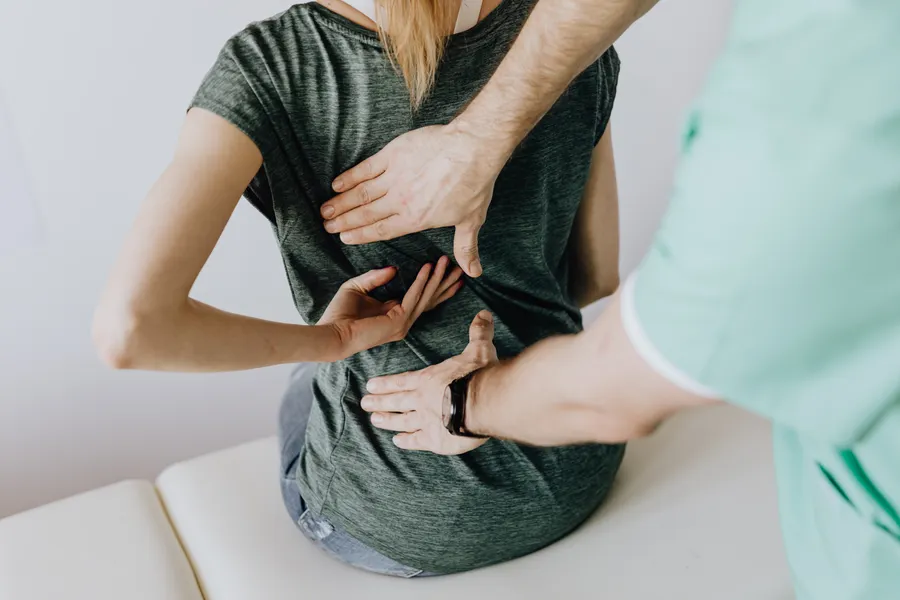
Person holding lower back in pain indicating sciatica

Most lower back pain — including sciatica — does not require surgery, injections, or long-term medication. Targeted physical therapy that addresses the actual source produces lasting relief in the majority of patients.

Most common conditions

  • Lumbar disc herniation — a disc pressing on a nerve, causing radiating leg pain or numbness
  • Muscle strain and spasm — from sudden movements, lifting, or prolonged poor posture
  • Sciatica — burning, shooting pain traveling from the lower back through the glute and down the leg
  • Spinal stenosis — narrowing causing leg pain and fatigue with walking
  • SI joint dysfunction — pain at the base of the spine mimicking disc or hip problems
  • Piriformis syndrome — a tight piriformis compressing the sciatic nerve

How PT treats lower back pain

  • McKenzie method — extension or flexion-based exercises tailored to centralize disc-related pain
  • Core stabilization — bird-dogs, dead bugs, and bridges protecting the lumbar spine long-term
  • Dry needling — for deep lumbar paraspinal trigger points manual therapy cannot fully release
  • Neural mobilization — nerve flossing and sciatic glides to reduce nerve irritation
  • Hip flexor stretching — releasing tight iliopsoas that compresses lumbar discs with every step
  • Body mechanics training — how to lift, sit, sleep, and move to protect the back every day

Sciatica is almost always treatable without surgery. The approach depends entirely on the source — which is why a proper evaluation matters before any treatment begins.

What every session includes: A personalized treatment plan reviewed and adjusted each visit — your therapist does not follow a script. Hands-on manual therapy, supervised therapeutic exercise, and a home program tailored to where you are in your recovery. Before every session ends, you know exactly what was done, why, and what comes next. Superbill provided as needed for PT visits for out-of-network insurance reimbursement.

Ready to get started?

Same-week appointments available. PTN Fitness comes to your home in Arlington VA, Northern Virginia, and DC.

Condition

Hip Pain Relief & Treatment

Hip pain affects everything — walking, sitting, sleeping, climbing stairs. Most hip conditions respond well to physical therapy before surgery is ever needed.

Person experiencing hip pain

Hip pain is often misdiagnosed because the hip refers pain in multiple directions — into the groin, down the thigh, and into the lower back. A proper evaluation identifies exactly what structure is involved.

Most common conditions

  • Hip bursitis (trochanteric) — inflammation on the outer hip, causing pain when lying on that side
  • Hip flexor tightness and strain — extremely common in anyone who sits for long periods
  • Labral tear — cartilage injury causing clicking, catching, or groin pain
  • Gluteal tendinopathy — degeneration of the glute tendons, often mistaken for bursitis
  • Piriformis syndrome — deep glute tightness compressing the sciatic nerve
  • Post hip replacement rehabilitation

How PT treats hip pain

  • Glute and hip strengthening — clamshells, abduction, and single-leg exercises
  • Hip flexor stretching — kneeling lunges and Thomas stretch to restore hip extension
  • Piriformis and deep hip rotator release — manual therapy and targeted stretching
  • Dry needling — for gluteal trigger points and piriformis tension
  • Gait retraining — correcting walking patterns overloading the hip
  • Progressive loading protocols for gluteal tendinopathy

What every session includes: A personalized treatment plan reviewed and adjusted each visit — your therapist does not follow a script. Hands-on manual therapy, supervised therapeutic exercise, and a home program tailored to where you are in your recovery. Before every session ends, you know exactly what was done, why, and what comes next. Superbill provided as needed for PT visits for out-of-network insurance reimbursement.

Ready to get started?

Same-week appointments available. PTN Fitness comes to your home in Arlington VA, Northern Virginia, and DC.

Condition

Knee Pain Relief & Rehabilitation

From ACL injuries to arthritis to runner's knee — the knee is one of the most frequently injured joints and one of the most rewarding to treat.

Knee pain rehabilitation with physical therapist

Knee pain is rarely just a knee problem. The hip above and the ankle below both influence knee mechanics. Every evaluation looks at the full picture, not just where it hurts.

Most common conditions

  • Patellofemoral pain — pain around or behind the kneecap, worse going down stairs or sitting
  • IT band syndrome — sharp outer knee pain in runners and cyclists
  • Meniscus tears — cartilage injury causing pain, swelling, and sometimes locking
  • Patellar tendinopathy — pain just below the kneecap with jumping or stair climbing
  • Knee osteoarthritis — stiffness and aching, especially in the morning
  • Pre and post knee replacement rehabilitation

How PT treats knee pain

  • Quad and glute strengthening — terminal knee extensions, step-downs, and single-leg progressions
  • IT band and hip stretching — addressing the upstream cause of lateral knee pain
  • Patellar mobilization — restoring kneecap tracking
  • Gait and movement retraining — correcting mechanics that create knee stress
  • Progressive loading for tendinopathy — eccentric and heavy slow resistance protocol
  • Dry needling — for quad and IT band trigger points

What every session includes: A personalized treatment plan reviewed and adjusted each visit — your therapist does not follow a script. Hands-on manual therapy, supervised therapeutic exercise, and a home program tailored to where you are in your recovery. Before every session ends, you know exactly what was done, why, and what comes next. Superbill provided as needed for PT visits for out-of-network insurance reimbursement.

Ready to get started?

Same-week appointments available. PTN Fitness comes to your home in Arlington VA, Northern Virginia, and DC.

Condition

Ankle & Foot Pain Relief

Your feet and ankles carry your entire body weight with every step. Physical therapy addresses the root cause — not just the symptom.

Hands holding ankle in pain

Research shows that up to 40% of first-time ankle sprains develop into chronic ankle instability (CAI) — not because the ligament never healed, but because the neuromuscular system was never retrained. A 2021 systematic review in JOSPT confirmed supervised PT is significantly superior to home exercise alone for restoring ankle function after sprain.

How ankle sprains happen and why they keep coming back: The most common mechanism is a supination-inversion injury — the foot rolls inward, tearing the anterior talofibular ligament (ATFL), the most frequently injured ankle ligament. More critically, this also disrupts the mechanoreceptors in the joint capsule — the sensors that tell your brain where your foot is in space. Without retraining these receptors through balance and proprioception work, the ankle stays functionally unstable even after the ligament heals, which is exactly why re-sprains are so common.

Plantar fasciitis: The plantar fascia runs from the heel to the base of the toes. When repetitively overloaded — through sudden activity increases, prolonged standing, or tight Achilles tissue — micro-tears develop at the calcaneal insertion, creating the classic sharp heel pain on first steps each morning. Like tendinopathy, it does not respond to rest alone. Progressive loading of the plantar fascia through targeted eccentric exercises stimulates the tissue remodeling required for lasting relief.

Most common conditions

  • Plantar fasciitis — stabbing heel pain first thing in the morning
  • Achilles tendinopathy — aching at the back of the heel worsening with activity
  • Ankle sprain rehabilitation — restoring stability, strength, and proprioception
  • Chronic ankle instability — repeated rolling or giving way from prior sprains
  • Posterior tibial tendon dysfunction — inner ankle pain and progressive arch flattening

How PT treats ankle & foot pain

  • Eccentric heel drops — the gold-standard evidence-based treatment for Achilles tendinopathy
  • Plantar fascia loading — towel curls, arch doming, and progressive standing exercises
  • Ankle proprioception training — single-leg balance progressions to restore neuromuscular control
  • Joint mobilization — restoring talar and subtalar mobility lost after ankle injuries
  • Dry needling of the calf — for trigger points contributing to Achilles and plantar symptoms
  • Gait retraining — addressing foot strike and mechanics driving the problem

What every session includes: A personalized treatment plan reviewed and adjusted each visit — your therapist does not follow a script. Hands-on manual therapy, supervised therapeutic exercise, and a home program tailored to where you are in your recovery. Before every session ends, you know exactly what was done, why, and what comes next. Superbill provided as needed for PT visits for out-of-network insurance reimbursement.

Ready to get started?

Same-week appointments available. PTN Fitness comes to your home in Arlington VA, Northern Virginia, and DC.

Condition

Tennis Elbow Pain Relief

Lateral epicondylitis — commonly called tennis elbow — is one of the most mismanaged pain conditions in primary care. It is not a tennis problem. It is a tendon loading problem, and it responds exceptionally well to targeted physical therapy.

Person playing tennis developing lateral epicondylitis

Research consistently shows that cortisone injections for tennis elbow provide short-term relief but worse long-term outcomes than physical therapy. A 2013 RCT published in JAMA found PT produced superior results at 12 months compared to both corticosteroid injection and wait-and-see approaches.

What causes tennis elbow

  • Repetitive eccentric loading of the extensor carpi radialis brevis (ECRB) tendon at its insertion on the lateral epicondyle — the primary driver in the vast majority of cases
  • Tendinopathy, not tendinitis — research has confirmed that lateral epicondylitis is a degenerative tendon condition (tendinosis), not an acute inflammatory process. This is why anti-inflammatory treatments alone do not resolve it
  • Occupational overuse — keyboard workers, plumbers, painters, cooks, and manual laborers develop this condition as frequently as racquet sport athletes
  • Trigger points in the extensor forearm muscles (ECRB, ECRL, brachioradialis) that refer pain along the lateral elbow and forearm
  • Cervical spine contribution — C5–C6 nerve root irritation can sensitize the lateral elbow and perpetuate symptoms even when the tendon is treated correctly

How PT achieves tennis elbow pain relief

  • Dry needling — directly targets trigger points in the ECRB and extensor mass. A 2018 systematic review in Physical Therapy found dry needling significantly reduced pain and improved grip strength in lateral epicondylalgia. Needling disrupts dysfunctional tendon tissue and stimulates a local healing response that passive rest cannot replicate
  • Eccentric and heavy slow resistance (HSR) loading — the most evidence-based intervention for tendinopathy. Tyler twist exercises and wrist extension eccentrics progressively load the ECRB through its full range to remodel tendon tissue
  • Manual therapy to the elbow and wrist — Mulligan mobilization with movement (MWM) technique has strong evidence for immediate pain reduction and improved grip in lateral epicondylalgia
  • Cervical spine assessment — when the neck is contributing, treating the C5–C6 segment resolves a layer of sensitization that forearm treatment alone misses
  • Activity modification and load management — identifying which gripping, lifting, and twisting activities are driving the load and pacing return to them appropriately

Why cortisone is not the answer: Corticosteroid injections for tennis elbow suppress symptoms in the short term but have been shown in multiple randomized controlled trials to result in worse outcomes at 6–12 months compared to physical therapy. They do not address the underlying tendon degeneration and can weaken collagen tissue with repeated use. PT resolves the root cause — impaired tendon loading capacity — rather than masking it.

What every session includes: A personalized treatment plan reviewed and adjusted each visit — your therapist does not follow a script. Hands-on manual therapy, supervised therapeutic exercise, and a home program tailored to where you are in your recovery. Before every session ends, you know exactly what was done, why, and what comes next. Superbill provided as needed for PT visits for out-of-network insurance reimbursement.

Ready to get started?

Same-week appointments available. PTN Fitness comes to your home in Arlington VA, Northern Virginia, and DC.

Condition

Wrist & Elbow Pain Relief

Repetitive strain and desk work accumulate into conditions that affect everything from typing to lifting a cup of coffee.

Wrist and hand therapy treatment

Most wrist and elbow conditions build slowly over time and respond very well to physical therapy when caught early. Waiting rarely helps. Early PT does.

Most common conditions

  • Tennis elbow — pain on the outer elbow from forearm extensor overuse
  • Golfer's elbow — inner elbow pain from flexor and pronator overuse
  • Carpal tunnel syndrome — numbness, tingling, and weakness from median nerve compression
  • De Quervain's tenosynovitis — pain at the base of the thumb from tendon inflammation
  • Cubital tunnel syndrome — ulnar nerve compression causing tingling in the ring and little finger

How PT treats wrist & elbow pain

  • Heavy slow resistance loading — the most evidence-supported treatment for epicondylitis
  • Neural mobilization — median and ulnar nerve gliding exercises
  • Dry needling — for forearm extensor and flexor trigger points driving elbow pain
  • Manual therapy — joint mobilization of the wrist, elbow, and surrounding structures
  • Ergonomics correction — keyboard position, wrist angle, and grip patterns that caused the problem

What every session includes: A personalized treatment plan reviewed and adjusted each visit — your therapist does not follow a script. Hands-on manual therapy, supervised therapeutic exercise, and a home program tailored to where you are in your recovery. Before every session ends, you know exactly what was done, why, and what comes next. Superbill provided as needed for PT visits for out-of-network insurance reimbursement.

Ready to get started?

Same-week appointments available. PTN Fitness comes to your home in Arlington VA, Northern Virginia, and DC.

Condition

Mid & Upper Back Pain Relief

The thoracic spine is often overlooked — but tightness and dysfunction there affects the neck, shoulders, and lower back all at once.

Mid-back manual therapy treatment

When the thoracic spine does not move well, the neck and lower back compensate — and that is where the pain shows up. A 2015 study in The Spine Journal found that thoracic manipulation significantly reduced neck pain and improved cervical range of motion — demonstrating that the mid back and neck are one functional unit. Treating the thoracic spine often resolves pain in multiple regions simultaneously.

Why the thoracic spine is so often overlooked: The thoracic spine has 12 vertebrae and 24 facet joints, each capable of becoming restricted or painful. Unlike the lumbar or cervical spine, the thoracic region rarely shows up on an MRI as a dramatic structural finding — so clinicians often miss it. Yet thoracic stiffness is one of the most common drivers of shoulder impingement (the scapula cannot rotate correctly on a stiff thorax), cervicogenic headache (upper thoracic restriction loads the suboccipital muscles), and lower back pain (the lumbar spine overworks when the thorax does not extend or rotate). Targeted thoracic manual therapy and extension mobilization reliably reduces pain in all three areas — often within a single session.

Most common conditions

  • Thoracic tightness and stiffness — driven by prolonged sitting and poor posture
  • Kyphosis (rounded upper back) — increased thoracic curvature from muscle weakness
  • Rhomboid and mid-trap pain — aching between the shoulder blades in desk workers
  • Rib dysfunction — joint restrictions causing sharp, breathing-related pain in the mid back
  • Postural strain from driving, desk work, or repetitive lifting

How PT treats mid & upper back pain

  • Thoracic joint mobilization — hands-on techniques restoring segmental movement
  • Foam roller thoracic extension — simple and effective for restoring mobility between sessions
  • Scapular and mid-trap strengthening — prone Y-T-W exercises and rowing patterns
  • Rib mobilization — specific manual techniques to restore rib joint motion
  • Dry needling — for rhomboid and mid-trap trigger points causing persistent pain
  • Postural correction training — exercises to build the habit of an upright thoracic spine

What every session includes: A personalized treatment plan reviewed and adjusted each visit — your therapist does not follow a script. Hands-on manual therapy, supervised therapeutic exercise, and a home program tailored to where you are in your recovery. Before every session ends, you know exactly what was done, why, and what comes next. Superbill provided as needed for PT visits for out-of-network insurance reimbursement.

Ready to get started?

Same-week appointments available. PTN Fitness comes to your home in Arlington VA, Northern Virginia, and DC.

Condition

Arthritis Pain Relief

Arthritis does not have to mean giving up the things you love. With the right movement program, most people with arthritis experience significant pain relief and regain function they thought was gone for good.

Elderly person with knee arthritis pain

Research is clear: movement is medicine for arthritis. Exercise reduces joint pain, improves cartilage nutrition, and builds the muscle support that takes pressure off inflamed joints. Staying still makes it worse.

Common arthritis conditions we treat

  • Knee osteoarthritis — the most common form, causing pain, stiffness, and swelling with stairs and prolonged walking
  • Hip osteoarthritis — deep groin or lateral hip ache that limits walking distance and makes getting in and out of the car painful
  • Shoulder and AC joint arthritis — stiffness and grinding with reaching overhead
  • Spinal arthritis (facet joint degeneration) — morning stiffness and back pain that eases with movement
  • Hand and wrist arthritis — difficulty gripping, pinching, and turning doorknobs

How PT provides arthritis pain relief

  • Joint mobilization — gentle hands-on techniques to restore mobility and reduce stiffness
  • Aquatic-style low-load strengthening progressions — building support muscle without aggravating inflamed joints
  • Gait and movement retraining — correcting compensations that accelerate joint wear
  • Heat, cold, and manual therapy for pain management between bouts of exercise
  • Home exercise programs designed around your arthritis pattern and fitness level
  • Education on pacing, activity modification, and joint protection strategies

What every session includes: A personalized treatment plan reviewed and adjusted each visit. Hands-on manual therapy, supervised therapeutic exercise, and a home program tailored to where you are in your recovery. Superbill provided as needed for PT visits for out-of-network insurance reimbursement.

Ready to get started?

Same-week appointments available. PTN Fitness comes to your home in Arlington VA, Northern Virginia, and DC.

Condition

Hypermobility Treatment

Being flexible is not always a strength. For people with hypermobile joints, lax connective tissue causes instability, chronic pain, and repeated injuries — and standard PT often misses the mark entirely.

Extremely flexible person demonstrating hypermobility

Hypermobility treatment is not about stretching more. It is about building precise neuromuscular control around unstable joints. Research published in Rheumatology (2021) found that targeted physiotherapy for hypermobile EDS significantly reduced pain and improved function — and that this population is systematically undertreated by standard PT protocols.

The clinical picture of hypermobility: Generalized joint hypermobility (GJH) is assessed clinically using the Beighton Score — a 9-point scale evaluating passive hyperextension of the fingers, thumbs, elbows, knees, and forward spinal flexion. A score of 5 or above (4+ in adults over 50) indicates hypermobility. In Hypermobile Ehlers-Danlos Syndrome (hEDS), connective tissue laxity is systemic — affecting joint capsules, ligaments, and even blood vessel walls — which explains why patients often experience fatigue, dysautonomia, and POTS alongside musculoskeletal pain.

Why standard PT often fails hypermobile patients: Generic strengthening protocols were designed for normal connective tissue. In hypermobile patients, exercises performed through end-range or with momentum — common in standard programs — repeatedly stress already-lax capsules and ligaments. Effective hypermobility treatment requires joint protection principles, closed-chain stability work within a controlled range, high-repetition low-load resistance, and neuromuscular re-education focused on co-contraction rather than power. A therapist who does not understand this will inadvertently worsen instability while trying to improve strength.

Common hypermobility presentations

  • Generalized joint hypermobility — joints that bend beyond normal range, causing daily aching
  • Hypermobile Ehlers-Danlos Syndrome (hEDS) — chronic widespread pain, fatigue, and joint instability
  • Recurrent joint sprains or subluxations — ankles, knees, and shoulders that “give out” repeatedly
  • POTS and autonomic symptoms related to connective tissue laxity
  • Post-injury instability — joints that never felt stable again after a sprain

How hypermobility treatment works

  • Joint stability and neuromuscular control training — proprioception work specific to your unstable joints
  • Low-load, high-rep strengthening to build protective muscle without overstressing lax connective tissue
  • Movement pattern education — how to protect your joints during everyday activities
  • Pacing and energy management for hEDS-related fatigue
  • Taping and bracing guidance for acute instability periods
  • Gradual return to sport or exercise without repeated re-injury

What every session includes: A personalized treatment plan reviewed and adjusted each visit. Hands-on assessment, supervised neuromuscular re-education, and a home program tailored to your specific hypermobility pattern. Superbill provided as needed for PT visits for out-of-network insurance reimbursement.

Ready to get started?

Same-week appointments available. PTN Fitness comes to your home in Arlington VA, Northern Virginia, and DC.

Condition

Sports Injury Rehabilitation

Getting hurt should not mean settling for “good enough.” Sports injury rehabilitation at PTN Fitness is built to return you to full performance — not just cleared to walk out the door.

Soccer player sports injury rehabilitation

Most athletes return to sport too soon — or not fully recovered. Objective return-to-sport testing determines readiness based on strength, power, and movement quality, not just how the injury feels on a given day.

Common sports injuries we treat

  • ACL reconstruction rehabilitation — structured progressions from swelling control to return-to-cut testing
  • Meniscus injury — conservative management or post-surgical rehab
  • Rotator cuff strain and shoulder labrum rehabilitation
  • Hamstring and quad strains — graded return to sprinting and loading
  • Tennis elbow and golfer’s elbow — tendinopathy treatment and load management
  • Ankle sprains — full rehabilitation to prevent chronic instability

How sports injury rehab works

  • Phase-based rehabilitation — acute, subacute, strengthening, and sport-specific phases
  • Eccentric loading for tendinopathy — the most evidence-based approach to tendon healing
  • Neuromuscular control training — retraining the movement patterns that reduce re-injury risk
  • Power and plyometric progressions — building sport-ready explosiveness before return to play
  • Functional movement screening — identifying compensations left from the injury
  • Return-to-sport criteria — objective tests, not just symptom resolution

What every session includes: A personalized treatment plan reviewed and adjusted each visit. Evidence-based sports rehabilitation, supervised progression, and a home program aligned with your sport and timeline. Superbill provided as needed for PT visits for out-of-network insurance reimbursement.

Ready to get started?

Same-week appointments available. PTN Fitness comes to your home in Arlington VA, Northern Virginia, and DC.

Condition

Chronic Pain Treatment

Chronic pain is not just “pain that lasted too long.” It changes how the nervous system works — and treating it requires a completely different approach than acute injury care.

Person with chronic back pain while walking

Chronic pain involves central sensitization — the nervous system has learned to amplify pain signals even in the absence of ongoing tissue damage. A landmark 2011 paper by Moseley and Butler established that understanding pain neurophysiology alone can reduce pain intensity and improve function — independent of any physical intervention. PT that combines pain science education with progressive movement produces results that medication alone cannot.

The neuroscience of chronic pain: In acute pain, signals travel from damaged tissue to the brain to warn of injury. In chronic pain, this system becomes maladaptive. The dorsal horn of the spinal cord becomes sensitized — amplifying signals from normal stimuli and generating pain without ongoing tissue pathology. This is why chronic pain sufferers often feel pain from light touch (allodynia) or have pain spread beyond the original injury site. It is not “in their head” — it is a real, measurable change in how the nervous system processes information, and it has a biological basis that responds to specific interventions.

Why exercise is the most powerful chronic pain intervention: A 2017 Cochrane review of over 260 trials confirmed that exercise therapy significantly reduces pain and improves function in chronic musculoskeletal conditions. Exercise induces endogenous opioid release, reduces inflammatory cytokines, and — critically — provides graded exposure to movement that directly downregulates the sensitized nervous system. The type and dosage of exercise matters enormously: too much too fast re-sensitizes; graded progression that respects pacing systematically recalibrates the pain threshold. This is the clinical skill chronic pain requires — and why a trained PT produces better outcomes than a gym program alone.

Chronic pain conditions we treat

  • Chronic low back pain — pain lasting more than 3 months that has not responded to standard treatment
  • Fibromyalgia — widespread musculoskeletal pain with fatigue and sleep disruption
  • Chronic neck and upper trap pain from desk work, stress, or prior injury
  • Complex regional pain syndrome (CRPS) — intense pain out of proportion to original injury
  • Post-surgical pain that persists beyond normal healing timelines
  • Myofascial pain syndrome — widespread trigger points causing referred pain patterns

How chronic pain treatment works

  • Pain neuroscience education — understanding pain changes how the nervous system responds to it
  • Graded exposure and activity progression — carefully rebuilding confidence in movement
  • Dry needling for myofascial trigger points — direct treatment of sensitized muscle tissue
  • Strength and aerobic conditioning — exercise is one of the most powerful chronic pain interventions
  • Breathing and relaxation techniques that reduce sympathetic nervous system activation
  • Pacing strategies — avoiding the boom-bust cycle that keeps chronic pain patients stuck

What every session includes: A personalized treatment plan reviewed and adjusted each visit. Chronic pain requires patience and a clinician who listens — every session here is one full hour, one-on-one. Superbill provided as needed for PT visits for out-of-network insurance reimbursement.

Ready to get started?

Same-week appointments available. PTN Fitness comes to your home in Arlington VA, Northern Virginia, and DC.

First Visit

What happens when we arrive

Here is exactly what to expect when your therapist comes to your home for the very first time — no surprises.

Every first session is approximately one hour. You receive both a comprehensive evaluation and hands-on treatment. You will feel better before we leave.

1

Comprehensive evaluation — thorough, not rushed

Your session begins with a full, unhurried review of your medical history, current symptoms, medications, and past treatments. A detailed hands-on physical exam follows — assessing posture, movement patterns, strength, flexibility, and the specific structures causing your pain. This is not a quick 5-minute intake. It is a real clinical assessment designed to understand why you hurt, not just where.

Have any medical records, imaging, or surgical notes available. Wear comfortable, loose-fitting clothing.
2

Your goals come first

Before any treatment begins, your therapist asks what you want to get back to. Whether that is returning to pickleball, walking without pain, lifting your grandchildren, or simply sleeping through the night — your personal goal shapes everything about the plan.

Think about what you would do differently if the pain were gone. That is the target.
3

Hands-on treatment starts today

The first session is not just talking. After the evaluation, treatment begins immediately — manual therapy, dry needling, assisted stretching, or therapeutic exercise, based on what we find. There are no wasted visits here.

Most patients feel a noticeable difference before the session ends.
4

A detailed, personalized plan

Before we leave, your therapist explains your customized treatment plan in plain language — what was found, what is causing your symptoms, which techniques will be used, and how many sessions are recommended. Every question is answered before we walk out the door.

Most patients see meaningful improvement in 4–12 sessions, depending on the condition.
5

Your home exercise program

You receive a simple, clear home exercise program to do between sessions. What you do between visits is just as important as the session itself. The right exercises, done consistently, are the foundation of every lasting recovery.

Each visit lasts approximately one hour — all hands-on time with a Doctor of Physical Therapy.

Service area & scheduling

PTN Fitness serves Arlington VA, Northern Virginia, and Washington DC for in-home visits. Online sessions are available everywhere. Pricing varies based on your location and the services needed. Same-week appointments are typically available.

Before your first session, complete the Patient Intake Form. It takes about 5 minutes and ensures your therapist arrives fully prepared for you.

What to bring: Any relevant medical records, imaging reports, or surgical notes. Wear comfortable, loose clothing that allows movement. If you have home exercise equipment you would like to use in your program, have it accessible.

Ready to get started?

Book your first session — your therapist will handle everything from there.

FAQ & Insurance

Honest answers to your questions

Everything you need to know about pricing, insurance, superbills, and what makes PTN Fitness different.

Patient Information

Everything you need to know before your first visit

From preparation to payment — clear answers so you can focus on getting better.

  • Complete the Patient Intake Form before your session so your therapist arrives prepared
  • Gather any relevant medical records, imaging (X-ray, MRI), or surgical reports
  • Wear comfortable, loose-fitting clothing that allows access to the area being treated
  • Have home exercise equipment accessible if you own resistance bands, weights, or a foam roller
  • Write down your questions — every one will be answered before we leave
  • Same-week appointments are typically available — contact us to schedule
  • A comprehensive evaluation — thorough, unhurried, and clinical. Not a 5-minute intake
  • Full review of your history, symptoms, medications, previous treatments, and goals
  • Detailed physical assessment: posture, movement patterns, strength, flexibility, and the structures involved
  • Hands-on treatment begins during the first session — no wasted visits, ever
  • A clear, plain-language explanation of your diagnosis and personalized treatment plan
  • A home exercise program tailored to your condition to start between sessions

In Virginia and most states, you can see a Doctor of Physical Therapy directly without a physician referral — called direct access.

  • Start care the same week without waiting for a referral appointment
  • Skip the primary care bottleneck and go directly to the specialist you need
  • Earlier treatment consistently produces better outcomes — conditions respond better when addressed early
  • If your insurance requires a referral for out-of-network reimbursement, we recommend obtaining one from your primary care physician

PTN Fitness is a cash-based practice. We accept cash, all major credit/debit cards, HSA, and FSA.

  • Transparent pricing discussed before your first session — no surprise bills
  • HSA and FSA funds are eligible expenses for physical therapy visits
  • Superbill provided as needed for PT visits to submit for out-of-network reimbursement
  • Personal training is cash-based only — no superbill applies

Good Faith Estimate: Under the No Surprises Act, you have the right to receive a written Good Faith Estimate of expected costs before your first session. Contact us before booking and we will provide one promptly.

The Case for Cash-Based Care

Why not billing insurance makes your care better

Most people assume insurance-based PT is the better deal. Here is what the experience actually looks like — and why paying directly often produces significantly better outcomes.

Why cash-based PT works better

  • 100% of your therapist's attention — no simultaneous patients
  • No visit limits — care continues until you are fully recovered
  • No prior authorizations — start the same week, not after a 2-week approval
  • Treatment based on what you need, not what insurance will reimburse
  • Transparent pricing before you book — no surprise bills
  • A full hour every visit, not 15 minutes with the therapist then an aide
  • Doctor of Physical Therapy every session, not a PTA for most of your care
  • HSA and FSA accepted — PT visits are eligible expenses

The real cost of insurance-based PT

  • Wait 2–4 weeks for an appointment while your condition worsens
  • Insurance decides how many visits you get — cutting you off before full recovery
  • Your therapist manages 6–10 patients at the same time as you
  • 10–15 minutes of hands-on care, then handed to an aide
  • Prior authorization required for certain treatments, creating delays
  • Deductibles and copays often total more than cash-based care
  • Treatment choices influenced by coverage, not clinical best practice
  • Surprise bills when insurance denies a claim you thought was covered

The math often surprises people. When you factor in your copay, deductible, and the reduced quality of insurance-driven care, cash-based PT frequently costs the same or less — while delivering significantly better results. And with a superbill, many patients recoup a meaningful portion through out-of-network benefits.

How to use your superbill

Step-by-step reimbursement guide

A superbill is a detailed, insurance-formatted receipt with everything your insurer needs to reimburse you for out-of-network physical therapy.

1
Call your insurance company first
Call the member services number on the back of your card. Ask: “Do I have out-of-network physical therapy benefits?” and “What is my out-of-network deductible and reimbursement percentage?” Write down what they tell you.
2
Attend your PT session — we provide the superbill
After your physical therapy visit, you receive a superbill with your diagnosis code, procedure codes, provider NPI number, and session details — everything your insurer needs. Request it at any time.
3
Submit the superbill to your insurance
Log in to your insurance portal and look for “Submit a Claim” or “Out-of-Network Reimbursement.” Upload or mail your superbill. Keep a copy for your records.
4
Receive your Explanation of Benefits (EOB)
Within 2–6 weeks, your insurer sends an EOB explaining what they will reimburse. If they deny the claim, you have the right to appeal. Many denials are overturned on first appeal.
5
Receive your reimbursement
Many patients with PPO plans recover 50–80% of their session cost. Note: superbills apply to physical therapy visits only — not personal training or online training sessions.
Insurance questions

Common insurance & payment questions

PTN Fitness is a cash-based practice and does not bill insurance directly. This allows us to provide full, one-on-one doctoral-level care without the restrictions that insurance-driven clinics face. For physical therapy visits, a superbill is provided as needed so you can seek out-of-network reimbursement from your insurance company.

A superbill is an insurance-formatted receipt containing diagnosis codes, procedure codes, provider credentials, and session details. After each PT visit, your therapist provides one. You submit it directly to your insurance company to request out-of-network reimbursement. The amount you receive depends on your plan’s out-of-network benefits.

No. Superbills apply to physical therapy visits only. Insurance does not reimburse personal training. If you receive both PT and personal training, superbills will cover the PT portions only.

Yes — HSA and FSA funds can typically be used for physical therapy visits. Personal training may qualify depending on your plan and whether there is documented medical need. The superbill provided after each PT visit supports any documentation requirements.

Frequently asked questions

Got questions? We have answers.

Straightforward answers to the questions we hear most often.

PTN Fitness serves Arlington VA, Northern Virginia, and Washington DC for in-home visits, including Centreville, McLean, Arlington, Falls Church, Fairfax, Reston, Alexandria, and Herndon. Online sessions are available to anyone, anywhere. Contact us to confirm availability at your address.

Session pricing varies depending on the service type, session duration, and your location within Northern Virginia and DC. Contact us directly for transparent pricing details — we will be straightforward about all costs before you book.

In most states, including Virginia, you can see a Doctor of Physical Therapy directly without a physician referral — this is called direct access. We welcome self-referred patients. If your insurance requires a referral to process superbill reimbursement, we recommend obtaining one from your primary care physician.

Every patient is different. Many patients see significant improvement in 4–12 focused, hour-long sessions — results that often take 24 or more clinic visits to achieve in a traditional setting. After your first session, your therapist will give you a clear, honest assessment and recommended timeline.

Please give at least 24 hours notice for cancellations or rescheduling. Late cancellations or no-shows may be subject to a cancellation fee. Life happens — just reach out as early as possible and we will always work with you.

PTN Fitness is a cash-based practice and does not bill insurance directly. This allows us to provide full, one-on-one doctoral-level care without restrictions. For physical therapy visits, a superbill is provided as needed so you can seek out-of-network reimbursement from your insurance company.

A superbill is an insurance-formatted receipt containing diagnosis codes, procedure codes, provider credentials, and session details. After each PT visit your therapist provides one. Submit it directly to your insurance company to request out-of-network reimbursement.

Yes — HSA and FSA funds can typically be used for physical therapy visits. Personal training may qualify depending on your plan and whether there is documented medical need. The superbill provided after each PT visit supports any documentation requirements.

No. Superbills apply to physical therapy visits only. Insurance does not reimburse personal training. If you receive both PT and personal training, superbills will cover the PT portions only.

Still have questions?

We are happy to answer anything before you commit to booking. Send an email — no pressure, no obligation.

Book a Session

Let's get you feeling better

Send us a message and we will respond within 24 hours to discuss your needs and schedule your first session.

Why patients choose PTN Fitness

Same-week appointments. A Doctor of Physical Therapy every session. Care in the comfort of your own home. No waiting rooms, no rushing, no passing you off to an aide.

Email us directly
Service area
Arlington, VA · Northern Virginia · Washington DC · Online sessions everywhere
Availability
Flexible — mornings, evenings & weekends
Pricing
Varies by location & service — contact for details

Before your first session, please complete the Patient Intake Form. It takes about 5 minutes and ensures your therapist arrives fully prepared.

Book a Free Consultation

Fill out the form below and we will be in touch within 24 hours to schedule your free 15-minute consultation.

We got your message.

We will be in touch within 24 hours to schedule your free 15-minute consultation call.

Or email directly: ptnfitness.care@gmail.com

Legal — PTnFitness PLLC

Privacy Policy

PTnFitness PLLC is committed to protecting your privacy and the information you share with us.

Questions about your privacy?

We are always happy to answer any questions. Call or send us a message.

Call (571) 306-0250
Legal — PTnFitness PLLC

Terms of Use

By accessing or using the PTnFitness PLLC website, services, content, or programs, you agree to the following Terms of Use.

Ready to book a session?

Call us directly or send a message — same-week appointments are typically available.

Call (571) 306-0250
Legal — PTnFitness PLLC

Medical & Fitness Disclaimer

Important information about the nature of PTN Fitness services and online content.

Questions about our services?

We are happy to answer any questions before you book. Call or send us a message.

Call (571) 306-0250
PTN Fitness Blog · Shoulder Health

Why Shoulder Pain Keeps Coming Back

By Dr. Michail Baskaron, DPT, CPT — In-Home Physical Therapist serving Northern Virginia & Washington DC

Physical therapist treating shoulder pain

You ice it. You rest it. You stretch it every morning. For a week or two it feels better — then the same dull ache is back, right where it always was. If this pattern sounds familiar, you are not alone. Recurring shoulder pain is one of the most common complaints among active adults in Northern Virginia and Washington DC, and the reason it keeps coming back is almost always the same: the root cause was never addressed.

The Real Problem: Treating the Symptom, Not the Source

Most people treat shoulder pain where they feel it. The shoulder hurts, so they ice the shoulder. They roll a lacrosse ball over the shoulder. They do a few arm circles. But the shoulder is almost never the actual problem. It is the victim of forces coming from somewhere else entirely — most commonly the thoracic spine, the scapula, the rotator cuff muscle imbalances, or poor movement patterns reinforced by hours at a desk.

A Doctor of Physical Therapy is trained to find where those forces originate. The clinic approach — 10 minutes with a therapist, then 40 minutes of generic exercises with an aide — rarely digs deep enough to uncover them. That is why so many people complete an entire course of PT and still end up back in pain six months later.

Shoulder pain that returns is shoulder pain that was not fully solved. The structure that hurts is rarely the structure that caused it. Lasting relief requires finding and correcting the original driver — wherever it actually lives.

The Five Most Common Hidden Drivers of Recurring Shoulder Pain

1. Thoracic Spine Stiffness

When your mid-back cannot rotate and extend freely, your shoulder compensates on every overhead reach, throw, or press. Over thousands of reps, that compensation becomes pain. Freeing up thoracic mobility is often the fastest way to change shoulder symptoms — even when the thoracic spine feels fine.

2. Scapular Control Weakness

The scapula (shoulder blade) is the foundation the shoulder joint moves from. If the muscles that stabilize it — serratus anterior, lower trapezius, rhomboids — are weak or poorly coordinated, the ball of the shoulder has no stable base. Every movement becomes a controlled fall. Strengthening scapular control is one of the highest-yield interventions in shoulder rehab.

3. Rotator Cuff Imbalance

Most people know the rotator cuff exists. Fewer understand that what matters is not just whether it is strong, but whether it is balanced. An overdeveloped anterior cuff (common in desk workers and bench pressers) combined with a weak posterior cuff creates the internal rotation bias that drives impingement, bursitis, and eventual tearing — even in people who “exercise regularly.”

4. Poor Breathing Mechanics

This one surprises people. Shallow, chest-dominant breathing overactivates the scalenes and upper trapezius — muscles that attach directly to the cervical spine and shoulder girdle. Chronic upper trapezius tension is a primary contributor to shoulder, neck, and upper back pain. Correcting breathing patterns often produces dramatic and rapid symptom changes.

5. Movement Pattern Dysfunction

How you reach, lift, throw, press, and carry matters as much as how strong you are. A movement pattern learned after an old injury, reinforced by thousands of reps, becomes a structural problem. The pattern itself must be identified, unlearned, and replaced — not just strengthened through. Generic exercise programs that do not address motor control are doomed to repeat the cycle.

What Actually Works

A full evaluation that examines the cervical spine, thoracic spine, scapular mechanics, rotator cuff balance, and movement patterns. In a single focused hour, a Doctor of Physical Therapy can typically identify which of these five drivers is responsible — and begin correcting it the same day. That is the difference between a targeted plan and a generic one.

Ready to find out what is actually driving your shoulder pain? PTN Fitness offers in-home physical therapy and movement assessments across Northern Virginia and Washington DC. Same-week appointments. One-on-one with a Doctor of Physical Therapy — every visit. Book a consultation today.

This article is intended for educational purposes only and does not constitute individualized medical advice. Always consult a qualified healthcare provider for diagnosis and treatment of your specific condition.

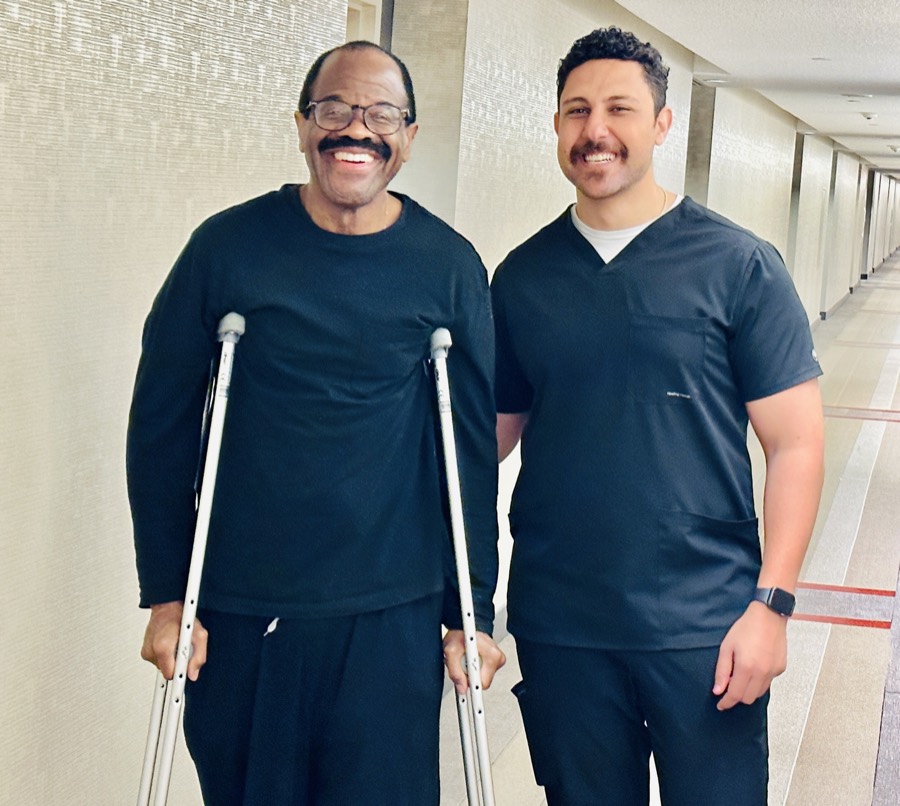
Stop treating the symptom — fix the source

An in-home evaluation in Northern Virginia or Washington DC can identify exactly what is driving your shoulder pain and begin correcting it the same day.

PTN Fitness Blog · Pain Relief & Recovery

Dry Needling: The Secret Weapon for Anyone Dealing with Muscle Tightness

By Dr. Michail Baskaron, DPT, CPT — In-Home Physical Therapist serving Northern Virginia & Washington DC

Physical therapist performing dry needling treatment

You have tried stretching it every morning. You have rolled it out with a foam roller. You have had massages. And yet that same tight knot in your upper trap, your lower back, your hip — it is still there, every single day. If this is your life, dry needling might be the thing you have never tried but should have started years ago.

What Is Dry Needling, Really?

Dry needling is a technique where a trained physical therapist inserts a thin, sterile needle directly into a trigger point — a tight, painful knot in the muscle. There is no medication injected (that is why it is “dry”). The needle itself is the treatment. When it hits the trigger point, the muscle responds with a brief twitch and then, for most people, an immediate release of tension they have been carrying for months or years.

It sounds intense. It is not. Most people feel a deep, brief pressure or twitch when the needle contacts the trigger point, followed by a wave of relief. Many describe it as “the best hurt they have ever felt.”

Dry needling is not acupuncture. Acupuncture is rooted in traditional Chinese medicine and works along energy meridians. Dry needling is evidence-based western medicine — it targets specific muscle tissue and motor points identified through clinical assessment. Completely different approach, completely different training, completely different outcome.

Why Stretching and Foam Rolling Often Are Not Enough

Here is something most people do not know: a true trigger point is not just a tight muscle. It is a dysfunctional patch of muscle tissue where the fibers have essentially seized up — starved of oxygen, building up waste products, unable to fully lengthen or relax even when you stretch. The neural drive feeding that area is misfiring.

Stretching lengthens the surrounding muscle but cannot reset the dysfunctional tissue within the trigger point. Foam rolling compresses the tissue superficially but rarely reaches the depth where the problem lives. Massage helps — but its effects can be short-lived when the underlying neuromuscular dysfunction is not addressed.

Dry needling goes directly to the source. The needle mechanically disrupts the contracted tissue, triggers a local twitch response (a reflex reset of the muscle), increases local blood flow, and resets the neural input to that area. The result is not just pain relief — it is a genuine change in how the muscle functions.

Who Is Dry Needling Actually For?

The short answer: almost anyone who carries chronic muscle tightness. You do not need to be an athlete or in severe pain to benefit. Dry needling works for:

The desk worker with a stiff neck

Hours at a computer lock the upper trapezius, levator scapulae, and suboccipitals into a shortened position. These muscles develop trigger points that cause neck stiffness, tension headaches, and that nagging “knot” between the shoulder blades that never goes away. Two to three dry needling sessions typically produce more lasting relief than months of stretching alone.

The active adult with persistent hip tightness

Tight hip flexors, piriformis, TFL, and glute medius are epidemic among people who sit during the day and exercise in the evening. Trigger points in these muscles restrict stride length, irritate the lower back and SI joint, and eventually lead to knee and hip pain. Dry needling can unlock years of accumulated tension in a handful of sessions.

Post-surgical patients rebuilding strength

After surgery — whether a knee replacement, ACL reconstruction, rotator cuff repair, or spinal procedure — surrounding muscles develop protective tension and trigger points as the body guards the injured area. This “protective spasm” does not always resolve on its own. Dry needling accelerates the release of this protective guarding and allows rehab exercises to actually work.

The runner or gym-goer with tight calves and hamstrings

Chronic calf tightness is one of the most common complaints among recreational runners, and it is almost always driven by trigger points in the soleus and gastrocnemius — not just overall muscle length. Dry needling directly into these trigger points often produces more lasting flexibility gains than a stretching program lasting months.

Anyone with tension headaches

A significant percentage of tension-type headaches originate from trigger points in the upper trapezius, sternocleidomastoid, and suboccipital muscles. These muscles refer pain directly to the head. Dry needling these specific muscles — not just the head — often dramatically reduces headache frequency and intensity within the first few sessions.

People who feel “always tight” no matter what they do

If you stretch daily, foam roll regularly, stay active, and still feel chronically tight — you likely have accumulated trigger points that passive stretching cannot resolve. Dry needling gives the nervous system a genuine reset that no amount of self-stretching can replicate. Many patients describe feeling “lighter” after their first session in a way they have not felt in years.

What to Expect at a PTN Fitness Dry Needling Session

Every dry needling session at PTN Fitness begins with a movement and palpation assessment. Dr. Baskaron identifies the specific trigger points contributing to your symptoms — not just where you feel pain, but where the dysfunction actually originates. Then needles are placed precisely, the local twitch response confirms contact with the trigger point, and the tissue begins to release.

Most people feel a noticeable change within 24–48 hours of their first session. Some feel immediate relief on the table. A mild soreness the day after treatment is normal and is a sign the tissue is responding — it passes quickly and is usually followed by improved range of motion and reduced pain.

Dry needling at PTN Fitness is performed in the comfort of your own home across Northern Virginia and Washington DC — no clinic, no commute, no waiting room. You receive the full session with a Doctor of Physical Therapy who also understands how to integrate what was released into your movement and strength work going forward.

Curious whether dry needling is right for you? PTN Fitness offers in-home dry needling in Northern Virginia and Washington DC. Same-week appointments. One full hour with a Doctor of Physical Therapy — every visit. Book a consultation today.

This article is for educational purposes only and does not constitute medical advice. Dry needling is contraindicated in certain conditions. Always consult a qualified healthcare provider before beginning any new treatment.

Finally feel what “loose” actually feels like

In-home dry needling in Northern Virginia and Washington DC. One focused session can change what months of stretching could not. Same-week appointments available.

Free Resources & Exclusive Access

Join the PTN Fitness Inner Circle

Get expert movement tips, recovery guides, and priority access to online classes — delivered to your inbox.

Weekly Movement Tips

Practical, doctor-written tips for pain-free living, better posture, and stronger movement.

Exclusive Offers

Members-only discounts on online coaching sessions and early access to new programs.

Online Class Access

First access to live and recorded online mobility, strength, and recovery classes.

Get free expert content from a DPT, CPT

Join hundreds of active adults in Northern Virginia and Washington DC getting smarter about their movement and recovery.

Request Received

Thank You for Contacting PTN Fitness

Your request has been received and we will reach out shortly to discuss your goals, availability, and next steps. We look forward to supporting your recovery.

Call Us Directly
What Happens Next

Dr. Baskaron will personally review your request and reach out to schedule a free 15-minute phone consultation.

Response Time

We typically respond within 24 hours on business days. Weekend requests are followed up Monday morning.

Your First Visit

Sessions are held in the comfort of your home across Northern Virginia and Washington DC.

Medical Emergency? This form is not monitored in real time. If you are experiencing a medical emergency, please call 911 immediately or go to your nearest emergency room.