Stroke Rehabilitation — In-Home Recovery
Expert neurological PT for stroke survivors at any stage of recovery — rebuilding strength, movement, and independence in the place where life happens: your home.
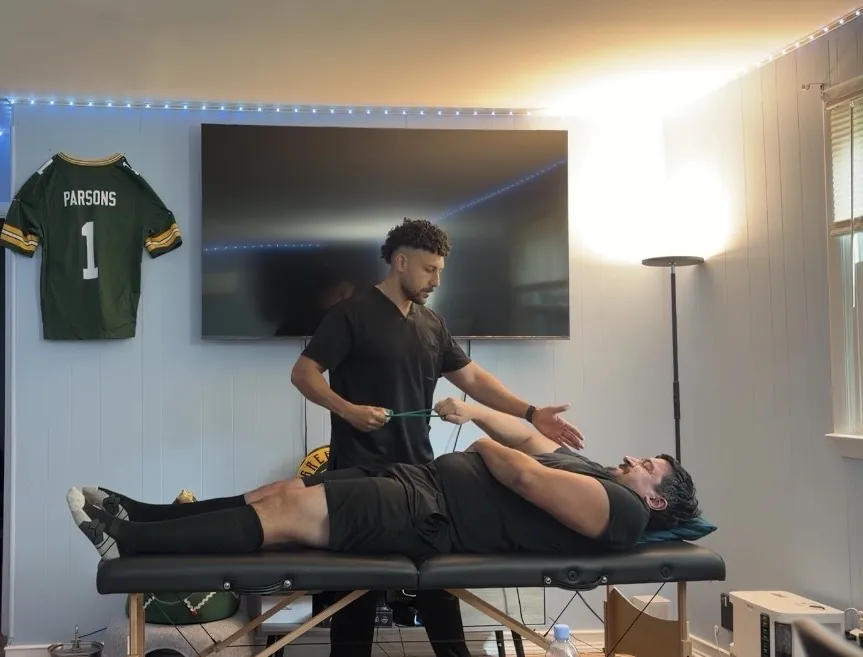
A stroke can change everything in a single moment — the ability to walk across a room, hold a cup, or get dressed independently. The path back is real, but it requires a therapist who understands the neuroscience of recovery, can identify exactly where the gaps are, and builds a program that challenges the nervous system in the right direction. At PTN Fitness, we bring doctoral-level stroke rehabilitation to your home in Northern Virginia and Washington DC, working with you and your family at every step of recovery.
What in-home stroke rehab covers
- Upper and lower extremity movement restoration using neuroplasticity-based protocols
- Gait retraining — from assisted walking to safe independent ambulation
- Balance and fall prevention tailored to post-stroke deficits
- Functional task training — dressing, transfers, kitchen tasks, stairs
- Spasticity and tone management to protect joint integrity
- Coordination and fine motor retraining
- Compensatory strategy training for areas of persistent deficit
- Home safety assessment and adaptive equipment recommendations
Why in-home rehab accelerates recovery
- No exhausting transport to a clinic — energy goes into rehabilitation, not travel
- Practice happens on your actual stairs, your furniture, your bathroom floor
- Carryover is immediate — skills learned in your environment transfer faster
- Home safety hazards identified and addressed in real time
- Full 60-minute sessions — no waiting room time cutting into treatment
- Family and caregiver training included at no additional cost
- Coordination with neurologist or physiatrist available upon request
Who we work with
- Stroke survivors in the acute, subacute, or chronic phase of recovery
- Patients recently discharged from inpatient rehab who need continued outpatient PT
- Individuals who have plateaued in a clinic setting and want intensive home-based care
- Older adults who cannot safely or comfortably travel to a clinic
- Patients with hemiplegia, hemiparesis, or partial motor deficits
- Stroke survivors managing fatigue, spasticity, or foot drop
A note for caregivers
Caring for a stroke survivor is one of the most demanding roles a family member can take on. In-home PT makes your job easier in two concrete ways: it eliminates the transport logistics that consume hours of your week, and it teaches you exactly how to assist with transfers, exercises, and daily activities safely and effectively.
Every session includes time to answer your questions, review the home exercise program together, and ensure you have the confidence to support recovery between visits. You are part of the treatment team — not just a bystander.
The evidence is clear: the more practice, the better the outcome. Neuroplasticity — the brain’s ability to rewire after injury — is driven by repetition and intensity. In-home PT removes every barrier to that intensity by bringing treatment to you. Serving Arlington VA, Northern Virginia, and Washington DC.
Stroke rehabilitation — frequently asked questions
Related services
Balance & Gait Training
Comprehensive fall prevention and walking retraining for older adults and stroke survivors.
Post-Surgical Rehabilitation
In-home rehab after joint replacement, spine surgery, or other procedures — delivered the same way.
What patients say on Google
5.0 from 16 Google reviews · See all reviews · Read them on Google (opens in a new tab)
“Michail actually changed my life for the better. I had a stroke; I was unconscious for 5 days and I didn't know what to do for 4 years. But Michail saved me; in just 8 weeks, he changed my life …”
Reviews are shared exactly as posted on Google, shortened where marked (…). Individual results vary.
Recovery does not wait. Neither should you.
In-home stroke rehabilitation — same-week appointments in Northern Virginia and Washington DC.
Prefer to pick a time yourself? Book online with Jane (opens in a new tab) (free account). Or text us.